
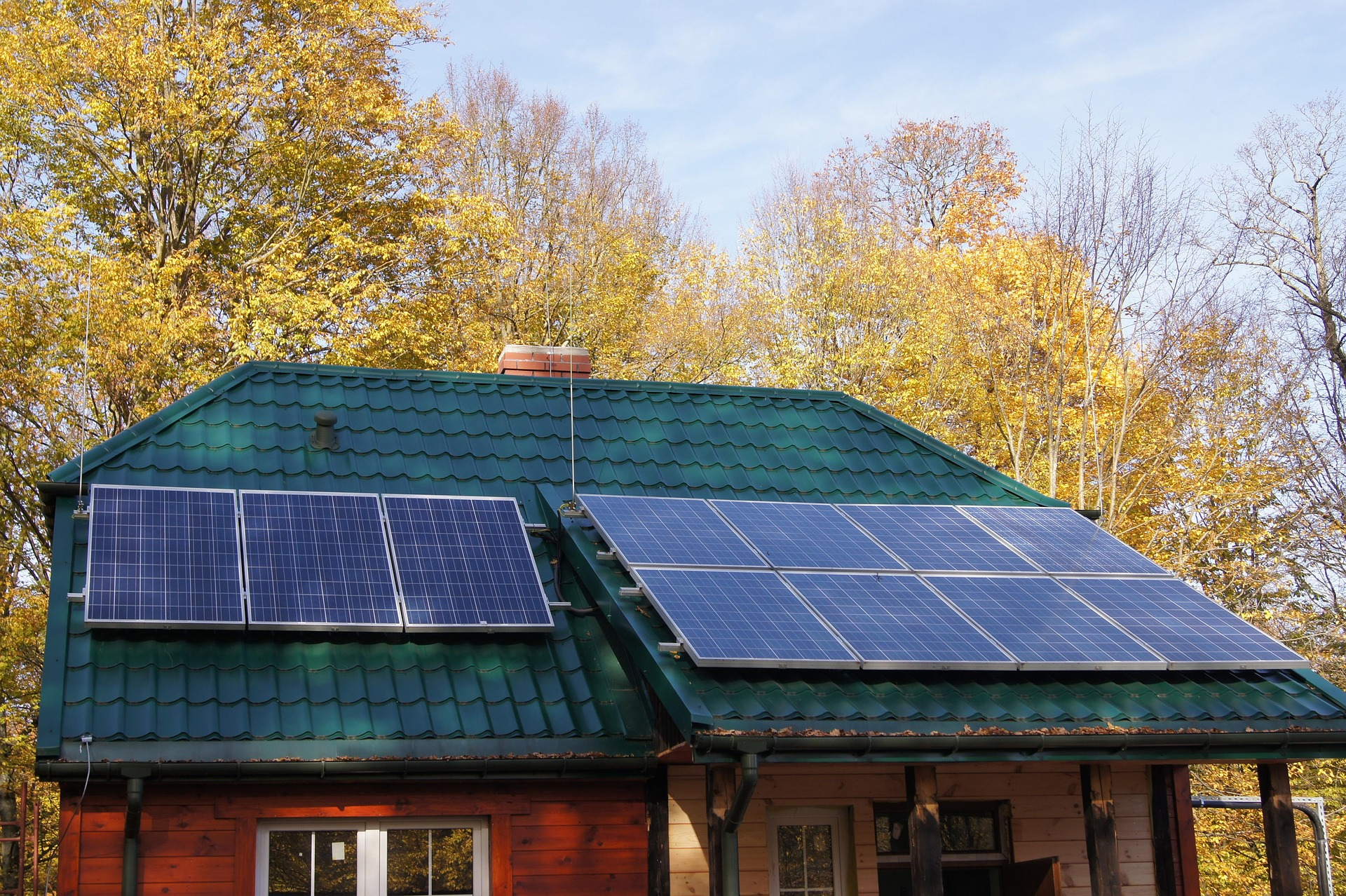
A solar array that runs a homestead in June can fall to a few percent of that output in December. Size it for June and the batteries will be flat by Christmas. Every agency that publishes a sizing method says the same thing: design for the worst month, not the average.
The U.S. Department of Energy puts it plainly. Year-round systems “must be sized to provide enough energy during the time of lowest insolation,” which in the lower 48 is usually December. USDA’s Natural Resources Conservation Service in North Dakota says to use the sun figure for “the month with the least solar intensity.” New Mexico State Extension calls it the worst case and builds its pump spreadsheet on winter sun. Three agencies, one rule.
NRCS also names the trap. Most makers rate their solar pumps on July sun. So the number on the box is a best-month number.
How much smaller is December?
This is where the published figures split, and the split matters more than any one of them.
The DOE’s Federal Energy Management Program says June sun “can be 50%–100% greater in June than in December.” That sounds mild. But it describes sunlight striking a panel tilted at the site’s latitude, in the lower 48.
NRCS North Dakota gives about 6.36 peak sun hours a day in July and 1.21 in December. That is a gap of more than five to one. The note does not say whether those are flat or tilted figures, and the size of the gap suggests flat.
Then come meter readings from real roofs. The University of Alaska Fairbanks solar manual prints a year of bills for a 4 kW array in Anchorage: 461 kWh in June and 10 kWh in December. That is 46 to one. A second Anchorage array in the same manual, 3.54 kW at a 30-degree tilt, made 371 kWh in June and 9 in December.
The same manual then contradicts itself. Its own table for a vertical panel in Anchorage shows December at about 19 percent of June. Same city, same month, a tenfold difference. The reason is tilt and snow. A wall-mounted panel faces the low winter sun almost square and sheds snow. A roof array at house pitch does neither.
So the ratio you hear depends on what is being measured: light on an ideally tilted plane, or kilowatt-hours out of an actual roof. Size from the second kind. If your array sits at roof pitch in the north, expect December to look more like Anchorage than like the DOE figure.
Tilt it steeper for winter
NRCS North Dakota and New Mexico State both publish the same rule. Tilt at latitude for the year. Add 15 degrees for winter, and subtract 15 for summer. At Bismarck that gives a winter tilt near 62 degrees.
Both of those are livestock water-pumping documents. The Alaska manual, written for home power, says a winter-weighted design wants a tilt “greater than the latitude” and gives no number. No DOE or NREL document found in this research states the plus-15 rule at all.
Steep tilt also helps with snow. NREL’s operations guide says snow “may slide off of arrays tilted more than approximately 30 degrees but will remain on lower tilts until it melts.” That is the only published shedding threshold. Nobody measured it, and snow needs room below the array to land.
Should you clear the snow?
Two federal sources disagree. NREL’s 2018 maintenance guide, written with Sandia, says snow removal “is generally not recommended because it may damage the modules.” It puts the average annual loss from snow at about 3 percent, rising to 10 to 16 percent in Michigan, Wisconsin and Maine.
The older DOE program guide says arrays “must be kept clear of snow.” DOE’s own Alaska analysis assumes the snow gets removed and still books a 5 percent loss.
Scale explains most of it. NREL is writing for fleets, where paid labor at $50 to $75 an hour does not pay back a 3 percent loss. Neither source had in mind an owner with a soft brush and a cold house. On an off-grid place, a December snow cover is not 3 percent of the year. It is most of the week. Clear it gently if the array is in reach, and never with a shovel or a metal rake.
Snow on the ground is the good news. The Alaska manual puts fresh snow at 70 to 80 percent reflective and says it can raise collection by 15 to 30 percent.
Cold batteries hold less
Lead-acid banks lose capacity in the cold, and the sources place the halfway point at different temperatures. NRCS North Dakota says a battery at -25°F “can have only half its rated capacity.” The Alaska manual puts half capacity at -10°F and doubles a battery bank in its worked example to cover it. A 1981 DOE report uses a straight-line rule of about 1 percent per 3°F, which would leave roughly 70 percent at -10°F.
These are not the same measurement. One is rated amp-hours, one is run time at a fixed load, and one is a room-temperature rule pushed far outside its range. Plan on the Alaska figure. It is the most conservative, and it is the one written for a house.
Every source landed on the same depth of discharge. NRCS, Kentucky Extension, Arizona Extension and the Alaska manual all cap lead-acid at 50 percent. NRCS adds that deep-cycle batteries can go to 80 percent but holds them to 50 because of North Dakota winters.
For storage, NRCS requires three days but lets the batteries cover only two of them, since a stock tank holds the third. Arizona Extension says three days. The Alaska manual says one to three cloudy days for a house.
Lithium needs warmth to charge
Pacific Northwest National Laboratory states the rule: lithium cells “will be irreversibly damaged if charged at low temperatures,” and most carry a 0°C charging floor. Then the same report tested cells at about 28°F. Lithium iron phosphate kept 102 percent of its capacity after 200 cycles. Two other lithium types did badly, and one failed by cycle 46.
The report does not reconcile those two findings. LFP survived what the rule forbids, in one test, at one temperature. That is not permission to charge a frozen bank. Treat 32°F as the floor unless the battery’s own label says otherwise.
No U.S. agency publishes a minimum temperature for a homestead battery room. One land-grant source goes the other way: the Alaska manual says gel-cell batteries suit unheated spaces. Beyond that, the closest thing to a heating spec is one 1981 federal install rated for 35 to 95°F.
The generator is the winter plan
The Alaska manual’s advice is to size the array moderately and add a backup generator. A good system runs it only 50 to 200 hours a year. At a federal site in Pinnacles, the array covered about 30 percent of winter load and the generator did the rest.
That is sound, and it carries a real risk. The Consumer Product Safety Commission counted 250 non-fire carbon monoxide deaths from consumer products in 2019. Generators figured in 100. And 55 percent of all 250 fell in November through February, the same months an off-grid system leans on its generator hardest. Before December, place the generator well away from the house as covered in sizing a backup generator, and test the CO alarms.
Sources
- University of Alaska Fairbanks Cooperative Extension Service, A Solar Design Manual for Alaska, Sixth Edition (2022)
- USDA Natural Resources Conservation Service, North Dakota, Solar-Powered Water Pump Systems for Stockwater Design (2017)
- U.S. Department of Energy, Federal Energy Management Program, Photovoltaics: A Proven Technology for Providing Electricity in Remote and Difficult-to-Access Locations (undated)
- U.S. Department of Energy Office of Indian Energy and NREL, Solar Energy Prospecting in Remote Alaska (2016)
- New Mexico State University Cooperative Extension Service, Solar-Powered Water Pump Design Spreadsheet Version II: User Manual (2014)
- National Renewable Energy Laboratory, Best Practices for Operation and Maintenance of Photovoltaic and Energy Storage Systems (2018)
- National Renewable Energy Laboratory, Integration, Validation, and Application of a PV Snow Coverage Model in SAM (2017)
- U.S. Department of Energy, Application, Sizing, Testing and Performance of the Photovoltaic Battery Subsystem at Natural Bridges National Monument, Utah (1981)
- Pacific Northwest National Laboratory, A Comparative Analysis of Lithium-Ion Battery Chemistries for Cold-Climate Maritime Applications (2021)
- University of Kentucky Cooperative Extension Service, Off-Grid Solar Systems: Understanding Components and Variables for Small Systems (2022)
- University of Arizona Cooperative Extension, Types of Solar Photovoltaic Systems (2017)
- U.S. Consumer Product Safety Commission, Non-Fire Carbon Monoxide Deaths Associated with the Use of Consumer Products, 2019 Annual Estimates (2023)
Leave a Reply