
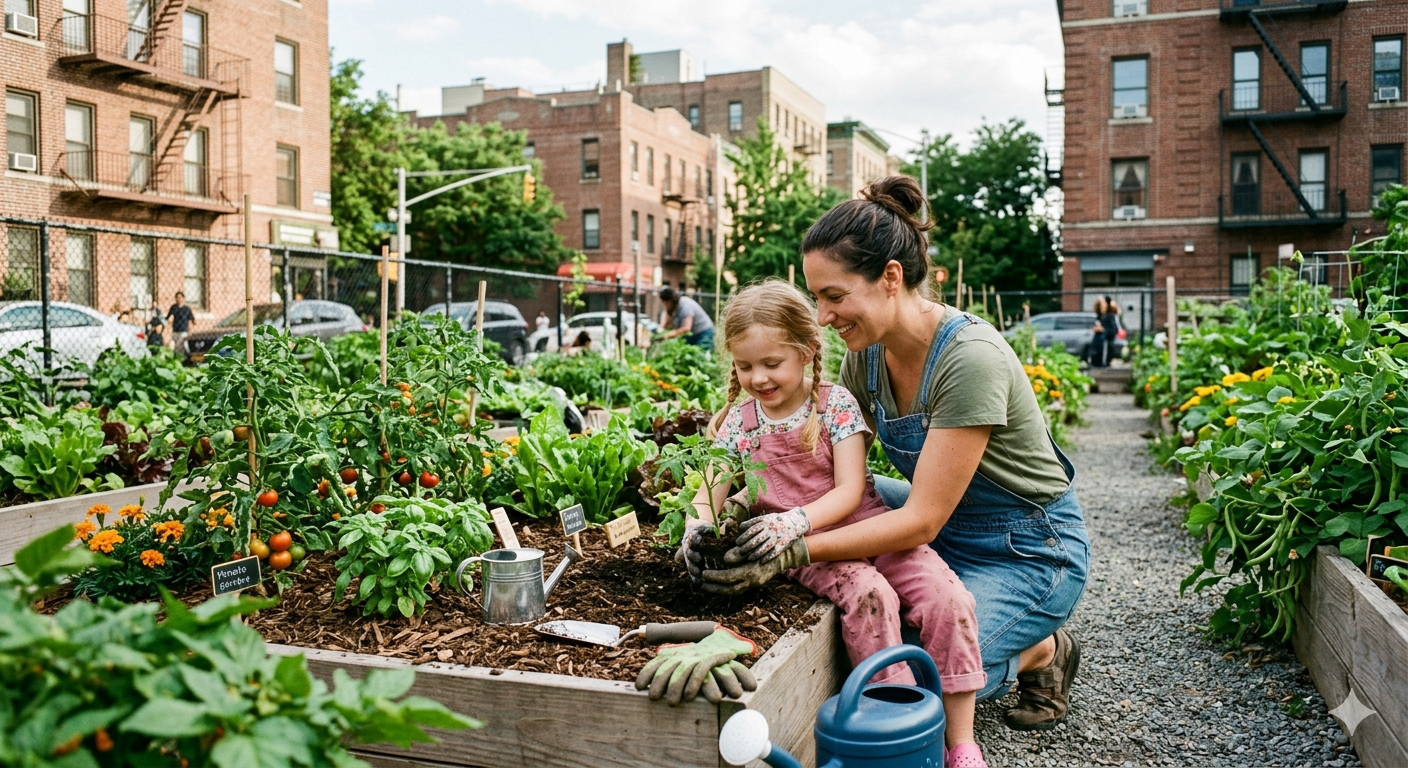
From City Dweller to Urban Homesteader: How Sarah Transformed Her Small Backyard into a Thriving Mini-Farm
When Sarah Mitchell looked out at her cramped 600-square-foot backyard in Portland, Oregon, she didn’t see much potential. Just a patch of struggling grass, a rusty fence, and her neighbor’s overlooking windows. Fast forward two years, and that same space now produces 40% of her family’s vegetables, houses six chickens that provide fresh eggs daily, and has cut her grocery bill by $300 a month.
Sarah’s journey wasn’t unique—but her results were remarkable. And the best part? She started with absolutely no farming experience and a modest budget of just $500.
If you’ve been wondering how to start urban homesteading but feel overwhelmed by where to begin, Sarah’s story will show you exactly what’s possible—even in the smallest spaces. Whether you’re motivated by rising food costs, environmental concerns, or simply the desire to know where your food comes from, this case study will walk you through the practical steps, common mistakes, and real results of transforming your urban space into a productive homestead.
What is Urban Homesteading? Understanding the Basics
Before diving into Sarah’s transformation, let’s clarify what urban homesteading actually means. Unlike traditional homesteading that requires acres of rural land, urban homesteading is the practice of self-sufficiency on a smaller, city-based scale. It’s about maximizing whatever space you have—whether that’s a backyard, balcony, or even just a sunny windowsill.
Urban homesteading typically includes:
- Growing vegetables, herbs, and fruit
- Keeping small livestock (chickens, rabbits, or bees where legal)
- Preserving and fermenting food
- Composting and waste reduction
- DIY projects and making household items
- Reducing dependence on commercial systems
The beauty of learning how to start urban homesteading is that you can begin at any level and gradually expand as your skills and confidence grow.
Sarah’s Starting Point: Assessing Your Space and Goals
Sarah’s first step wasn’t rushing to buy seeds or build chicken coops. Instead, she spent two weeks carefully assessing what she had and what she wanted to achieve.
Week 1: Space Assessment
Sarah created a simple map of her yard, noting:
- Sun exposure: She tracked which areas got 6+ hours of direct sunlight (essential for most vegetables)
- Water access: She identified where downspouts and hose bibs were located
- Existing structures: She cataloged what was already there (shed, fence lines, patio)
- Problem areas: She marked poorly draining spots and heavily shaded zones
- Local regulations: She researched Portland’s urban agriculture ordinances
This assessment revealed that while her yard was small, she had three prime sunny spots totaling about 200 square feet—perfect for intensive vegetable gardening.
Week 2: Goal Setting
Rather than trying to do everything at once, Sarah prioritized based on:
Her final goals for Year 1 were:
- Grow summer vegetables (tomatoes, peppers, squash, greens)
- Start composting kitchen waste
- Add 3-4 chickens by fall (after gaining confidence)
- Learn one preservation method (canning)
Key Takeaway: One of the biggest mistakes new urban homesteaders make is trying to do everything simultaneously. Sarah’s focused approach allowed her to build skills progressively without burning out.
Month 1-3: Starting Small with Container and Raised Bed Gardens
When learning how to start urban homesteading, beginning with food production makes the most sense for most people. It provides quick wins, tangible results, and immediate cost savings.
The Initial Garden Setup
Sarah’s first investment was $300 in materials:
- Two 4’x8′ raised beds ($120 for cedar lumber and hardware)
- Quality soil and compost ($100 for 1.5 cubic yards)
- Seeds and starter plants ($50)
- Basic tools ($30—hand trowel, pruners, garden fork)
She chose raised beds for several reasons:
- Better soil control in her clay-heavy yard
- Improved drainage
- Easier on her back
- Cleaner appearance in her urban setting
Pro tip: Sarah built her beds only 10 inches deep, saving money on soil while still providing adequate depth for most vegetables.
The First Crops: Quick Wins Matter
Sarah strategically chose crops that would:
- Mature quickly (lettuce, radishes)
- Provide high yields in small spaces (cherry tomatoes, bush beans)
- Offer multiple harvests (cut-and-come-again greens)
- Grow well in her climate zone
Her first three months produced:
- 15 pounds of salad greens
- 8 pounds of radishes
- 20 pounds of sugar snap peas
- The beginning of tomato and pepper plants
Total savings: $75 (compared to farmers’ market prices)
While this didn’t seem dramatic, these early successes built Sarah’s confidence tremendously. She was actually growing food in her backyard!
Month 4-6: Expanding Production and Adding Chickens
With her garden established and producing, Sarah tackled her second major goal: adding chickens to her urban homestead.
The Chicken Coop Journey
Sarah’s chicken coop project taught her valuable lessons about urban homesteading:
Initial plan: Build an elaborate coop from scratch ($400 budget)
Reality check: After researching and attempting to build, she realized:
- Her carpentry skills were limited
- The time investment was significant
- Pre-made coops weren’t much more expensive
Final solution: She purchased a well-reviewed 4-chicken coop for $350 and spent a weekend customizing it with:
- Better ventilation
- A extended run using PVC and chicken wire ($50)
- Roosting bar improvements
- Nesting box modifications
Choosing and Raising Chickens
Sarah selected four chickens based on research:
- 2 Rhode Island Reds (excellent layers, hardy)
- 2 Buff Orpingtons (friendly, good for beginners)
The startup costs were:
- Four pullets (young hens): $80
- Feeder and waterer: $40
- Initial feed and supplies: $30
Within three months, her chickens began laying, and by month six, she was collecting 20-24 eggs per week—more than her family could use. She began trading extras with neighbors for items like honey and homemade bread.
Monthly egg savings: $20-25
But the value went beyond money. Sarah’s children became involved in daily chicken care, learning responsibility and where food comes from. The chickens also provided garden gold: nitrogen-rich manure for composting.
Month 7-12: Establishing Systems and Expanding Skills
The second half of Sarah’s first year focused on creating systems that made urban homesteading sustainable long-term.
Composting System Implementation
Sarah set up a three-bin composting system in a corner of her yard:
- Bin 1: Active compost (kitchen scraps and chicken bedding)
- Bin 2: Maturing compost
- Bin 3: Finished compost ready to use
This system transformed waste into resources:
- Kitchen scraps that once went to the trash
- Chicken bedding and manure
- Garden waste and fall leaves
- Cardboard and paper
Annual savings on compost purchases: $150
Food Preservation Skills
Sarah took a canning class and learned to preserve her garden surplus:
- 24 jars of tomato sauce
- 12 jars of pickles
- 18 jars of various jams
This wasn’t just about saving money—it extended her harvest throughout winter and provided homemade gifts for holidays.
Season Extension Techniques
To maximize production, Sarah added:
- Cold frames over raised beds ($40 in materials) extending her season by 6-8 weeks
- Row covers to protect cool-season crops
- Succession planting to ensure continuous harvests
These techniques increased her total annual production by an estimated 30%.
Real Results: Year One Financial and Production Breakdown
After twelve months of urban homesteading, Sarah calculated her actual results:
Expenses
- Initial setup (beds, tools, soil): $300
- Chicken coop and run: $400
- Chickens and supplies: $150
- Seeds, plants, and amendments: $200
- Canning supplies and equipment: $100
- Miscellaneous (books, education): $50
Total First-Year Investment: $1,200
Savings and Production
- Vegetables grown (estimated retail value): $850
- Eggs produced (vs. organic egg prices): $280
- Compost created (vs. purchased): $150
- Preserved foods: $200
Total First-Year Value: $1,480
Net result: Sarah broke even in year one while developing invaluable skills and establishing infrastructure that would produce for years to come.
Intangible Benefits
Beyond dollars, Sarah reported:
- Improved family diet with fresh, organic produce
- Reduced stress from gardening and chicken therapy
- Stronger community connections through trading and sharing
- Environmental satisfaction from reduced waste and food miles
- Educational experiences for her children
How to Start Urban Homesteading: Your Action Plan
Based on Sarah’s experience, here’s your practical roadmap for getting started:
Phase 1: Foundation (Weeks 1-4)
Phase 2: First Steps (Months 2-4)
Phase 3: Expansion (Months 5-8)
Phase 4: Optimization (Months 9-12)
Common Challenges and Solutions from Sarah’s Experience
Challenge 1: Time Management
Problem: Sarah initially spent 10+ hours weekly on her homestead, which wasn’t sustainable.
Solution: She systematized tasks:
- Morning routine: 15 minutes (chickens, quick garden check)
- Evening routine: 15 minutes (chickens, watering if needed)
- Weekend intensive: 2 hours (major garden work, harvesting, canning)
Challenge 2: Pest and Disease Issues
Problem: Aphids decimated her first kale planting; powdery mildew hit her squash.
Solution:
- Learned integrated pest management (IPM) techniques
- Introduced beneficial insects
- Improved air circulation between plants
- Accepted some loss as part of the learning process
Challenge 3: Neighbor Relations
Problem: One neighbor complained about the chickens (before hearing any actual noise).
Solution:
- Proactively invited neighbors to visit and see the setup
- Shared eggs regularly with adjacent homes
- Kept the coop immaculately clean
- Ensured compliance with all local regulations
Challenge 4: Information Overload
Problem: Too many conflicting opinions on the “right” way to do things.
Solution:
- Focused on region-specific advice (Pacific Northwest gardening)
- Tested multiple methods to find what worked in her conditions
- Found 2-3 trusted mentors instead of following dozens of sources
Lessons Learned: Sarah’s Top 10 Urban Homesteading Tips
After her successful first year, Sarah shared these insights:
Essential Tools and Resources for Beginning Urban Homesteaders
Must-Have Tools (Under $100)
- Quality garden fork and trowel
- Bypass pruners
- Watering can or hose with spray nozzle
- Garden gloves
- Harvest basket or bucket
Recommended Books
- “The Urban Homestead” by Kelly Coyne and Erik Knutzen
- “Square Foot Gardening” by Mel Bartholomew
- “Storey’s Guide to Raising Chickens” by Gail Damerow
Online Resources
- Local extension office website (free, region-specific advice)
- Urban homesteading forums and Facebook groups
- YouTube channels focused on small-space growing
- Instagram for visual inspiration and community
FAQ: Your Urban Homesteading Questions Answered
1. How much space do I need to start urban homesteading?
You can start urban homesteading with as little as a sunny balcony or windowsill. Sarah’s productive homestead operates on just 600 square feet, but even 50 square feet can provide meaningful yields. Container gardening on a balcony can produce hundreds of dollars worth of herbs, greens, and tomatoes annually. Start with what you have—you’ll be surprised how much food can come from a small space with intensive gardening methods.
2. Is urban homesteading actually cost-effective?
Urban homesteading can be cost-effective, but it depends on your approach and expectations. Sarah broke even in her first year and now saves $3,600 annually while enjoying better food quality. The key is starting with modest investments, focusing on high-value crops, and viewing it as a multi-year investment. You won’t save money in month one, but by year two or three, the savings become substantial. The intangible benefits—food quality, stress reduction, skills development—often outweigh the pure financial calculation.
3. How much time does urban homesteading require weekly?
Time requirements vary dramatically based on your scope. Sarah’s established homestead requires about 4-5 hours weekly during peak season and less than 2 hours in winter. A beginner setup with a few containers and no livestock might need only 1-2 hours weekly. Chickens add about 15-20 minutes daily. The key is building efficient systems and choosing low-maintenance approaches that fit your schedule. Start small and expand only when you have time capacity.
4. What can I grow if I don’t have a yard?
Plenty! Balcony and patio gardeners successfully grow herbs (basil, cilantro, parsley), salad greens, cherry tomatoes, peppers, strawberries, and dwarf fruit trees in containers. Focus on high-value, vertical-growing plants. Window boxes can produce impressive amounts of herbs and greens. South-facing windows allow for indoor herb gardens year-round. Some urban homesteaders even grow mushrooms indoors. Your limiting factor is usually sunlight—most vegetables need 6+ hours of direct sun.
5. How do I know if chickens are allowed in my area?
Check three sources: (1) Your city’s municipal code (usually searchable online under “urban agriculture” or “animals”), (2) Your homeowner’s association rules if applicable, and (3) Your local zoning office. Many cities allow hens (no roosters) with limits on numbers (often 3-6) and requirements for coop placement. Some require neighbor approval or permits. Don’t assume they’re not allowed—many cities have updated ordinances in recent years. Sarah discovered Portland allowed up to 6 hens without a permit, even in residential neighborhoods.
Conclusion: Your Urban Homesteading Journey Starts Today
Sarah’s transformation from urban dweller to confident urban homesteader didn’t happen overnight, but it also didn’t require special skills, vast resources, or a huge time commitment. What it required was a decision to start, a willingness to learn, and the understanding that every expert was once a beginner.
Learning how to start urban homesteading isn’t about achieving perfection or complete self-sufficiency from day one. It’s about taking meaningful steps toward a more intentional, connected, and sustainable lifestyle. Whether you start with a single tomato plant on your balcony or transform your entire backyard like Sarah did, you’re joining a growing movement of people reclaiming food production and self-reliance.
The most important lesson from Sarah’s story? The best time to start was yesterday. The second best time is today.
Take Your First Step
Ready to begin your urban homesteading journey? Here’s your action plan for this week:
Remember, Sarah started with nothing but a patch of struggling grass and a desire to grow her own food. Two years later, she’s producing 40% of her family’s vegetables, gathering fresh eggs daily, and inspiring her neighbors to start their own urban homesteading journeys.
Your story starts now. What will you grow?
—
Share your urban homesteading journey in the comments below! What’s holding you back from starting, or what was your first successful crop? Let’s build a community of urban homesteaders supporting each other.