
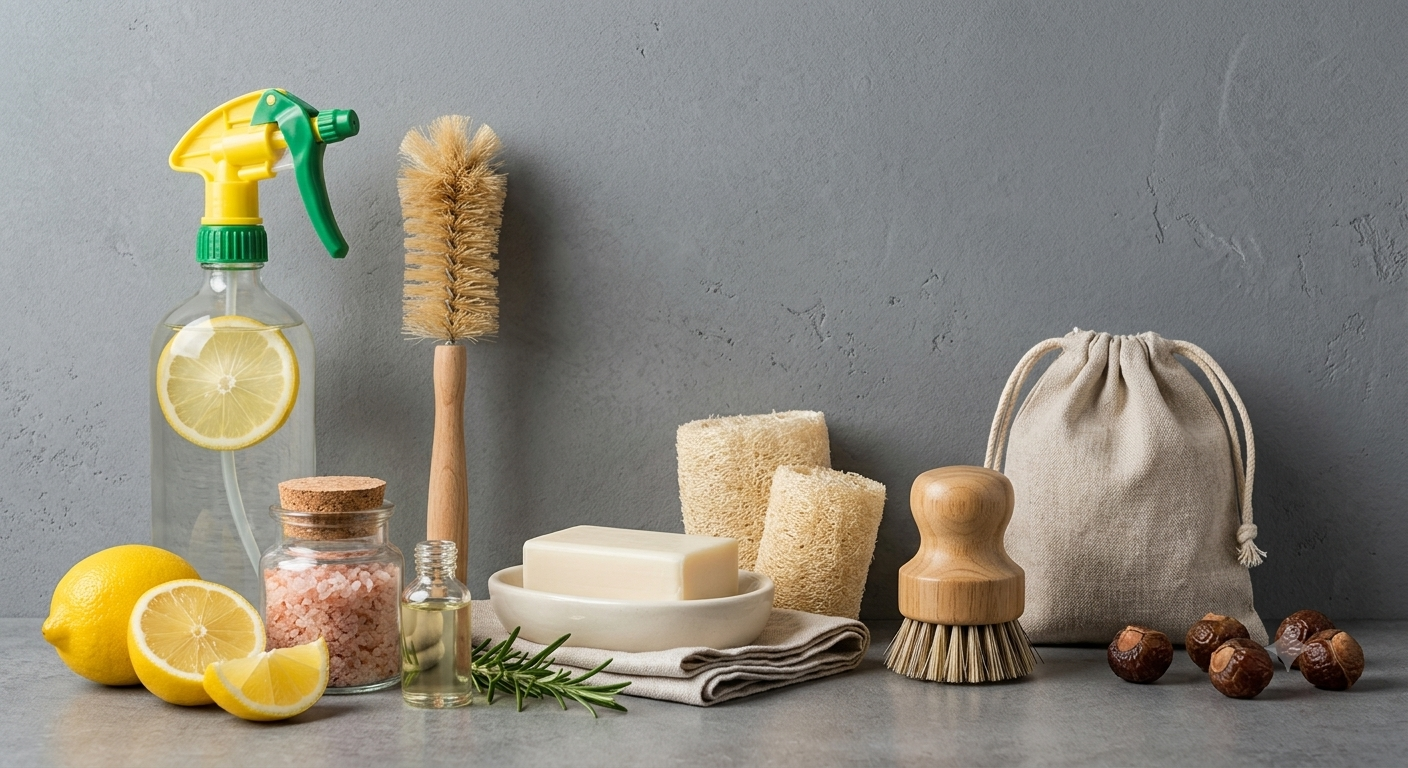
The Ultimate Guide to DIY Natural Cleaning Products: Clean Your Home the Green Way
Picture this: You’re standing in the cleaning aisle of your local supermarket, squinting at product labels filled with unpronounceable chemical names, and wondering if you really need a different cleaner for every surface in your home. What if I told you that everything you need to create powerful, effective cleaning solutions is probably already sitting in your kitchen pantry?
Welcome to the world of DIY natural cleaning products! Not only will making your own cleaners save you money (we’re talking hundreds of dollars a year), but you’ll also eliminate harsh chemicals from your home, reduce plastic waste, and gain the satisfaction of knowing exactly what you’re using to clean your living spaces.
In this comprehensive guide, I’ll walk you through everything you need to know about creating your own natural cleaning arsenal—from essential ingredients to specific recipes, storage tips, and troubleshooting common issues. Whether you’re a seasoned DIY enthusiast or just starting your green cleaning journey, you’re about to discover how simple and rewarding homemade cleaning products can be.
Why Switch to DIY Natural Cleaning Products?
Before we dive into recipes and formulas, let’s talk about why making the switch matters.
Health Benefits
Commercial cleaning products often contain volatile organic compounds (VOCs), synthetic fragrances, and harsh chemicals that can trigger allergies, asthma, and skin irritations. When you create DIY natural cleaning products, you control every ingredient, ensuring your family breathes easier and stays healthier.
Environmental Impact
Those plastic bottles under your sink? Most end up in landfills or oceans. By making your own cleaners, you can reuse containers indefinitely, dramatically reducing your plastic footprint. Plus, natural ingredients break down harmlessly in water systems, unlike many conventional cleaners.
Cost Savings
Here’s a game-changer: A bottle of all-purpose cleaner costs about $4-6 and lasts maybe a month. A homemade version costs less than $1 and works just as well—if not better. Over a year, you could save $200-300 on cleaning supplies alone.
Customization
Prefer lavender to lemon? Want an extra-strength degreaser? With DIY natural cleaning products, you’re the formulator. Adjust scents, strengths, and textures to suit your preferences and specific cleaning needs.
Essential Ingredients for Your Natural Cleaning Pantry
Building an effective collection of DIY natural cleaning products starts with stocking these powerhouse ingredients. The best part? You probably already have most of them.
The Core Five
1. White Distilled Vinegar
- Cuts through grease and grime
- Natural disinfectant (kills 99% of bacteria, 82% of mold)
- Removes soap scum and hard water deposits
- Cost: About $3 per gallon
2. Baking Soda (Sodium Bicarbonate)
- Gentle abrasive for scrubbing
- Deodorizes naturally
- Reacts with vinegar for extra cleaning power
- Cost: Less than $1 per pound
3. Castile Soap
- Plant-based, biodegradable soap
- Versatile base for many cleaners
- Available in various scents
- Cost: Around $15 per 32-ounce bottle (lasts months)
4. Essential Oils
- Add natural fragrance
- Many have antibacterial properties
- Popular choices: tea tree, lavender, lemon, eucalyptus
- Cost: $6-15 per bottle (you use only drops at a time)
5. Lemon Juice
- Natural bleaching agent
- Fresh scent
- Cuts through grease
- Cost: About $3 per bottle
Bonus Ingredients
- Hydrogen Peroxide: Excellent disinfectant and whitener
- Olive Oil: Perfect for wood polish
- Cornstarch: Great for windows and polishing
- Salt: Natural abrasive for tough stains
Top DIY Natural Cleaning Product Recipes
Now for the fun part—let’s get mixing! These tried-and-true recipes will handle 90% of your household cleaning needs.
All-Purpose Cleaner
This workhorse formula tackles countertops, appliances, walls, and most hard surfaces.
Ingredients:
- 2 cups water
- 2 tablespoons white vinegar
- 1 teaspoon castile soap
- 15-20 drops essential oil (lemon or tea tree work great)
Instructions:
Pro Tip: Don’t use on granite or marble—the vinegar can etch natural stone.
Glass and Window Cleaner
Say goodbye to streaks with this crystal-clear formula.
Ingredients:
- 1 cup water
- 1 cup white vinegar
- 1 tablespoon cornstarch
Instructions:
Heavy-Duty Scrubbing Paste
Perfect for bathtubs, sinks, tile, and tough stains.
Ingredients:
- 1 cup baking soda
- 1/4 cup castile soap
- 1 tablespoon water (add more if needed)
- 10 drops tea tree essential oil
Instructions:
Disinfecting Spray
For when you need serious germ-fighting power.
Ingredients:
- 1 cup water
- 1/4 cup hydrogen peroxide (3% solution)
- 1/4 cup white vinegar
- 20 drops tea tree or eucalyptus essential oil
Instructions:
Important: Never mix vinegar and hydrogen peroxide in a concentrated form—always dilute separately in water first.
Wood Polish and Cleaner
Keep your furniture looking gorgeous naturally.
Ingredients:
- 1/4 cup olive oil
- 1/4 cup white vinegar
- 10 drops lemon essential oil
Instructions:
Floor Cleaner
Safe for most hard floors (not waxed floors).
Ingredients:
- 1 gallon warm water
- 1/4 cup white vinegar
- 2 tablespoons castile soap
- 10 drops peppermint or lavender essential oil
Instructions:
Toilet Bowl Cleaner
Keep your throne sparkling clean.
Ingredients:
- 1 cup baking soda
- 1 cup white vinegar
- 10 drops tea tree essential oil
Instructions:
Storage and Safety Guidelines for DIY Natural Cleaning Products
Creating effective DIY natural cleaning products is only half the battle—proper storage ensures they remain effective and safe.
Storage Best Practices
- Use glass or quality plastic bottles: Avoid containers that previously held chemicals
- Label everything: Include ingredients and date made
- Keep away from children and pets: Even natural cleaners should be stored safely
- Use dark bottles for peroxide-based cleaners: Light degrades hydrogen peroxide
- Store in cool, dry places: Avoid direct sunlight and heat
Shelf Life Guide
Most DIY natural cleaning products last:
- Vinegar-based cleaners: 3-6 months
- Castile soap-based cleaners: 2-3 months
- Powder formulas: 6-12 months in airtight containers
- Oil-based polishes: 3-4 months
Tip: Make smaller batches more frequently to ensure freshness.
Safety Reminders
- Never mix vinegar and hydrogen peroxide together: Mix them separately in water
- Test on inconspicuous areas first: Especially on delicate surfaces
- Ensure proper ventilation: Even natural cleaners benefit from fresh air
- Avoid using vinegar on: Natural stone, waxed surfaces, cast iron, hardwood floors with specific finishes
Common Mistakes to Avoid
Learning from others’ mistakes saves time and frustration. Here are the most common pitfalls when making DIY natural cleaning products:
Using Too Much Soap
More soap doesn’t mean more cleaning power—it means more residue. Start with less castile soap than you think you need. You can always add more.
Expecting Instant Results
Some natural cleaners work differently than chemical versions. Disinfectants may need several minutes of contact time. Scrubbing pastes might require a bit more elbow grease. Be patient!
Not Shaking Before Use
Natural ingredients separate—it’s normal! Always shake your bottles before using DIY natural cleaning products.
Mixing Incompatible Ingredients
Never combine:
- Vinegar and hydrogen peroxide directly
- Castile soap and vinegar in concentrated forms (they neutralize each other)
- Different commercial cleaners with your DIY versions
Giving Up Too Soon
That first batch might not be perfect. Adjust ratios, try different essential oils, and find what works for your home and preferences.
Tips for Success with Natural Cleaning
Start Small
Don’t overhaul your entire cleaning routine overnight. Start with one or two DIY natural cleaning products, master those, then expand your collection.
Invest in Good Tools
Quality microfiber cloths, spray bottles, and scrub brushes make natural cleaners work better. Good tools multiply effectiveness.
Embrace the Scents
Natural cleaners smell different from commercial products. Vinegar scent dissipates as it dries. Essential oils provide pleasant natural fragrances without synthetic chemicals.
Keep a Cleaning Schedule
Natural cleaners work best with regular maintenance. A quick daily wipe-down prevents buildup that requires heavy-duty cleaning.
Adjust for Your Water
Hard water affects cleaning performance. If you have hard water, you might need slightly more soap or vinegar in your formulas.
Beyond Basic Recipes: Advanced DIY Natural Cleaning Products
Once you’ve mastered the basics, try these specialized formulas:
Carpet Freshener
- 1 cup baking soda
- 20 drops lavender essential oil
- Mix, let sit overnight, sprinkle on carpets, let sit 15 minutes, vacuum
Fabric Softener
- 2 cups white vinegar
- 10 drops essential oil
- Add 1/4 cup to rinse cycle
Garbage Disposal Freshener
- Freeze vinegar and lemon peels in ice cube trays
- Run through disposal weekly
Air Freshener Spray
- 1 cup distilled water
- 2 tablespoons vodka or rubbing alcohol
- 15-20 drops essential oils
- Spray as needed (shake first)
Troubleshooting Common Issues
Problem: My all-purpose cleaner feels greasy
Solution: You’re using too much soap. Reduce castile soap by half.
Problem: Spray bottle is clogged
Solution: Castile soap can clog. Dilute more or strain your mixture before bottling.
Problem: Vinegar smell is too strong
Solution: Reduce vinegar concentration or increase essential oils. The smell dissipates as it dries.
Problem: Not cutting through grease
Solution: Add more castile soap or try warmer water. For tough grease, let cleaner sit longer before wiping.
Problem: Streaks on glass
Solution: Use less cleaner, ensure cloth is clean, or try distilled water instead of tap water.
Frequently Asked Questions About DIY Natural Cleaning Products
1. Are DIY natural cleaning products really as effective as commercial cleaners?
Absolutely! DIY natural cleaning products are highly effective for everyday cleaning and disinfecting. Vinegar kills 99% of bacteria, and studies show that baking soda and castile soap effectively remove dirt and grime. However, for specialized situations (like mold remediation or hospital-grade disinfection), you might need stronger solutions. For typical household cleaning, natural products work just as well as—and often better than—conventional cleaners.
2. How much money will I actually save making my own cleaners?
Most people save $200-400 annually by switching to DIY natural cleaning products. A gallon of all-purpose cleaner costs less than $5 to make (and lasts months), compared to $20-30 for equivalent store-bought bottles. Initial investment in essential oils and castile soap pays for itself within weeks.
3. Can I use DIY natural cleaning products if I have pets or children?
Yes! That’s one of the biggest advantages of DIY natural cleaning products. The ingredients are significantly safer than conventional cleaners. However, proper storage is still important—even natural ingredients shouldn’t be ingested in large quantities. Keep essential oils away from cats (they’re sensitive to certain oils), and always store cleaners out of reach.
4. How long do homemade cleaners last, and how can I tell if they’ve gone bad?
Most DIY natural cleaning products last 2-6 months depending on ingredients. Vinegar-based cleaners last longest (up to 6 months), while castile soap mixtures should be used within 2-3 months. Signs of expiration include: separation that won’t remix, unusual smells (different from normal vinegar/essential oil scents), cloudiness, or visible mold growth. When in doubt, make a fresh batch.
5. What surfaces should I avoid using DIY natural cleaners on?
Avoid using vinegar-based cleaners on: natural stone (granite, marble, limestone), waxed surfaces, certain hardwood floor finishes, and cast iron cookware. Don’t use lemon on brass or copper unless you want a weathered look. Always test on an inconspicuous area first, and research your specific surface materials. Most modern surfaces like laminate, tile, glass, and stainless steel handle natural cleaners beautifully.
Conclusion: Your Journey to Greener Cleaning Starts Now
Making the switch to DIY natural cleaning products isn’t just about following a trend—it’s about taking control of your home environment, protecting your family’s health, and making a positive impact on the planet. Plus, it’s incredibly empowering to know you can create effective cleaning solutions from simple, natural ingredients you understand and trust.
You don’t need a cabinet full of specialized products for every surface in your home. With just a few basic ingredients—vinegar, baking soda, castile soap, and essential oils—you can tackle virtually any cleaning challenge. You’ll save money, reduce waste, eliminate harsh chemicals, and might even find yourself enjoying the cleaning process a bit more (okay, maybe that’s a stretch, but it definitely feels better!).
Remember, perfection isn’t the goal here. Start with one or two recipes that address your biggest cleaning needs. Experiment with scents and ratios until you find your perfect formulas. Give yourself permission to adjust and adapt based on your specific home and preferences.
The planet doesn’t need a handful of people creating perfect DIY natural cleaning products—it needs millions of us doing it imperfectly. So grab that spray bottle, mix up your first batch, and join the green cleaning revolution!
Ready to get started? Pick one recipe from this guide and make it this weekend. Share your experience in the comments below—I’d love to hear which DIY natural cleaning product you tried first and how it worked for you. Here’s to a cleaner, greener, healthier home!