
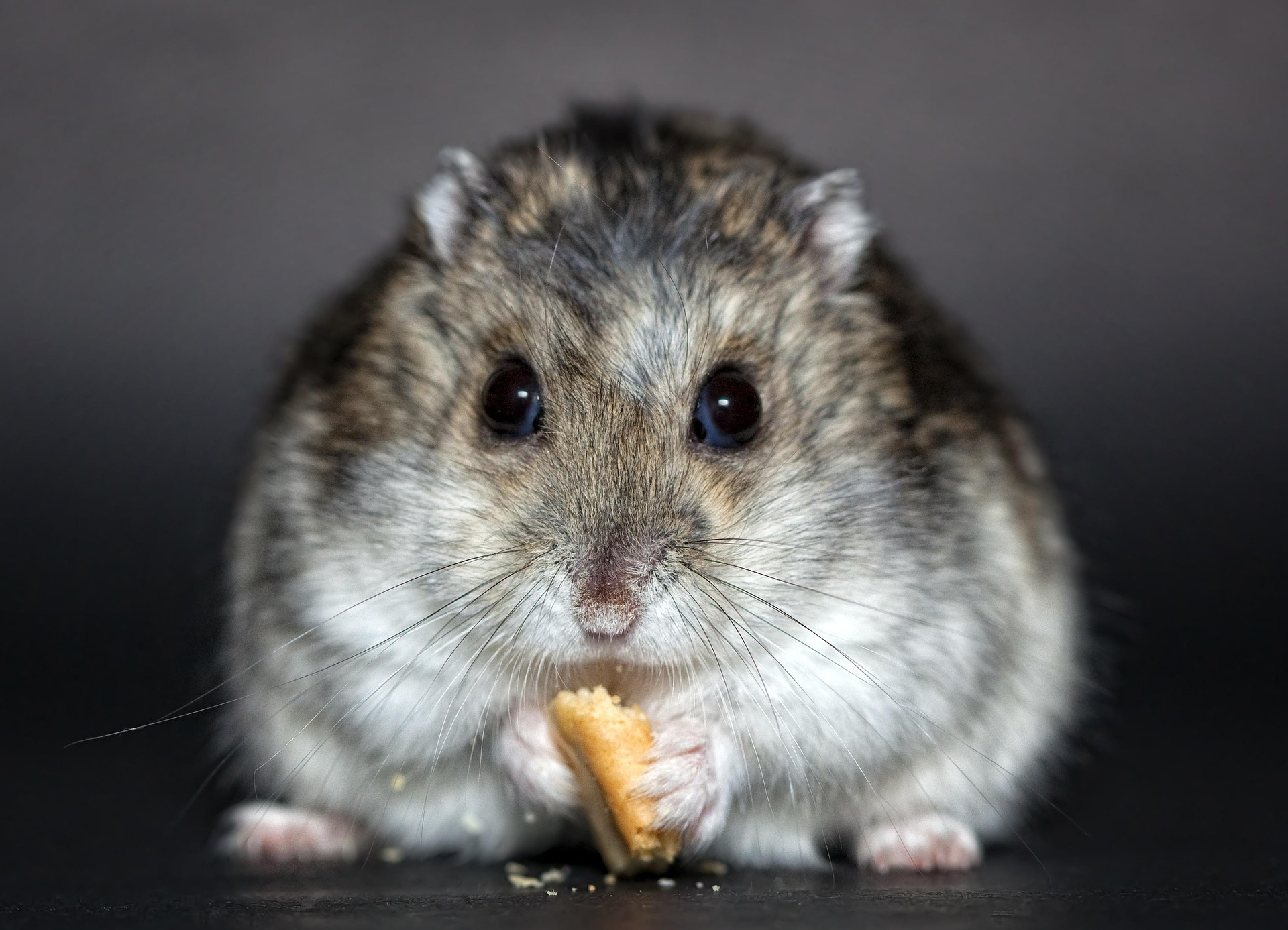
A house mouse gets through a gap of about a quarter inch. A Norway rat needs about half an inch. UC IPM, UNL Extension and the eXtension wildlife damage program all publish those two figures, and they are the only numbers that matter before you buy anything.
The coins are the problem. Penn State Extension prints the familiar version, that a mouse fits a hole the size of a dime and a rat the size of a quarter. A dime measures about 0.705 inch and a quarter about 0.955, so both run roughly three times the measured spec. Oklahoma State uses the same coins shifted one animal down, calling a dime the rat hole and a pencil the mouse hole. Two land-grant publications cannot agree which rodent the dime belongs to. Seal to a quarter inch and forget the coins.
What actually holds
UNL’s rodent-proof construction guide gives materials by gauge. Hardware cloth at 19 gauge in half-inch mesh stops rats, and 24 gauge in quarter-inch mesh stops rats and mice both. Galvanized sheet metal, 24 gauge or heavier. Kick plates and door edging, 22 gauge. Concrete at least two inches thick if reinforced and three and three-quarter inches if not. Door bottoms sit less than a quarter inch off the threshold.
One detail explains the whole failure list. Rodent incisors curve inward, so a smooth round surface larger than about 7/8 inch gives them nothing to start on. Give them an edge and they are through most materials quickly. That is why UC IPM names plastic screening, rubber, vinyl, wood and expanding foam as ineffective, and why its rat guidance says never to use chicken wire. Steel wool is a temporary plug that rusts, which is worse than useless in a damp feed room. Penn State names copper mesh instead.
Metal bins, and the test nobody ran
UNH Extension is blunt about containers: keep all feed covered in metal, because plastic can be chewed through. eXtension says plastic and wood feed hoppers are frequently gnawed through and need repair with sheet metal. UC IPM notes that mice chew through containers sold as rodent-proof. Missouri Extension adds that sacked feed stacks on pallets with room around and under it for inspection, which is the same discipline that decides whether a stack of hay keeps or rots.
Now the limit of that guidance. No land-grant service, USDA, EPA, CDC or FDA publication tests plastic bins against live rodents, rates one design against another, or gives a time to breach. The advice is categorical, not measured. Product reviews fill the space, which is the kind of source extension exists to replace. Buy the metal can, but buy it knowing you are acting on judgement rather than data.
Eight inches or eighteen
Two acceptable sources disagree about how far feed sits off the floor and away from the wall. UNL G1105 says at least 8 inches off the ground and at least a foot from walls. eXtension says 18 inches above the floor and 18 to 24 inches from walls, with shelving at 18 inches and preferably 30.
A third UNL publication settles it without meaning to. G1530 lists what a rat can do: jump 36 inches vertically and 48 horizontally, climb a three-inch pipe, burrow 36 inches down, drop 50 feet without injury, swim half a mile, and reach 13 inches up a wall. Thirteen beats eight. Use the 18-inch figure and read the lower one as what it probably is, the minimum clearance for getting a flashlight and a trap behind the stack.
Outside the wall, UNL asks for 3 feet of weed-free ground around the foundation, or a 24-inch strip of inch-and-a-half crushed rock three inches deep. Those read as competing numbers and are two different treatments. Bare dirt needs the width; coarse gravel does not, because a rat will not burrow through it. USDA APHIS adds a grass height of 3 inches or less.
Traps before bait
Mouse snap traps go no more than 6 to 10 feet apart, a figure that falls out of a mouse home range 10 to 30 feet across. Rat traps go 10 to 20 feet apart. UNL puts about two dozen snap traps in a 1,500-square-foot building for a new infestation, which is the closest the literature comes to a density. Nobody publishes one for a feed room specifically.
Rats are neophobic. UNL and Missouri both say to leave traps unset until the bait has been taken at least once, and two weeks of that is normal. Mice need no such patience.
Skip glue boards. UC IPM reports that adult rodents detect and avoid the glue, so the catch skews to juveniles, and Penn State says flatly that glue boards are not recommended. An unheated feed room has a second problem with them: UNL notes that standard glue boards fail below 32°F.
If you reach for bait
EPA sorts bait stations into four tiers. Tier 1 resists children, dogs and weather, and is the only tier allowed outdoors, within 50 feet of a building. Tier 2 resists children and dogs but not weather. Tier 3 resists children only, indoors, where pets have no access. Tier 4 has not been shown to resist anything.
Second-generation anticoagulants are not banned, whatever you have read. Brodifacoum, bromadiolone, difenacoum and difethialone came off the general consumer market and stayed registered for commercial and agricultural use, in containers of 8 pounds or more. What a homesteader can buy retail is bromethalin, chlorophacinone or diphacinone, in a ready-to-use station, as block or paste rather than pellets, a pound of bait or less. California prohibits most anticoagulant use outright. The rest of the country does not, and writing that it does misleads everyone outside that state.
The reason to think hard is what leaves the station. A rodent can take a lethal dose in one night and die five to seven days later, so a loaded carcass walks around all week. The New Hampshire Veterinary Diagnostic Laboratory found rodenticide exposure in 34 of 35 animals tested from around that state. California Fish and Wildlife, reviewing cases from 2015 to 2017, detected brodifacoum in 87 percent of tested predators and bromadiolone in 67 percent.
Two things that do not work
Ultrasonic devices fail, and five acceptable sources say so. University of Arizona Extension reports that caged animals housed beside them went on living and reproducing normally, that rats and bats in treated attics did the same, and that the Federal Trade Commission charged several manufacturers with false advertising in the 1980s and made them refund customers. UNL gives the mechanical reason, which is the one that matters in a room full of bins: the sound is directional, does not penetrate behind objects, and loses intensity fast with distance. It cannot reach where the mice are.
The barn cat is harder to give up. UNL says house cats and dogs do not provide effective rat control in most circumstances, and Missouri adds the backfire, which is that pets attract rats because rats feed on pet food. A University of Florida study across 40 homesteads found cats and dogs together cut rodent foraging while either alone did not. The one extension source that recommends a cat count, three or four for a poultry house, also still discusses rodenticides that left this market decades ago.
Cleaning up after
CDC’s sequence is specific, and the first two steps are the ones people skip. Open doors and windows for 30 minutes, and leave the room while they air it. Then do not sweep or vacuum droppings, urine or nesting material, because sweeping is how the dust goes airborne. Spray until wet with 1.5 cups of household bleach per gallon of water, soak 5 minutes, wipe up with a damp towel. UC IPM asks for 10 minutes instead. Gloves for routine work, and for a heavy infestation CDC calls for goggles and a HEPA respirator. Hantavirus kills 38 percent of the people who develop respiratory symptoms from it, and that number is the entire reason for the no-sweeping rule.
Sources
- UC Statewide IPM Program, Pest Notes 7483, House Mouse — https://ipm.ucanr.edu/home-and-landscape/house-mouse/
- UC Statewide IPM Program, Pest Notes 74106, Rats — https://ipm.ucanr.edu/pdf/pestnotes/pnrats.pdf
- UC Statewide IPM Program, Pest Notes 74161, Deer Mouse — https://ipm.ucanr.edu/PMG/PESTNOTES/pn74161.html
- University of Nebraska-Lincoln Extension, G1530, Rodent-Proof Construction: Structural — https://extensionpubs.unl.edu/publication/g1530/na/pdf/view
- University of Nebraska-Lincoln Extension, G2017, Rodent-Proof Construction: Drains and Feeding Equipment — https://extensionpubs.unl.edu/publication/g2017/na/pdf/view
- University of Nebraska-Lincoln Extension, G1105, Controlling House Mice — https://extensionpubs.unl.edu/publication/g1105/na/html/view
- University of Nebraska-Lincoln Extension, G1737, Controlling Rats — https://extensionpubs.unl.edu/publication/g1737/2007/html/view
- University of Nebraska-Lincoln Extension, G1646, Bait Stations for Controlling Rats and Mice — https://extensionpubs.unl.edu/publication/g1646/2012/pdf/view/g1646-2012.pdf
- eXtension Wildlife Damage Management, Rodent Exclusion Methods — https://wildlife-damage-management.extension.org/rodent-exclusion-methods
- University of Missouri Extension, G9446, Controlling Rats — https://extension.missouri.edu/publications/g9446
- Penn State Extension, Is There a Mouse in the House? Eliminate Mice with IPM — https://extension.psu.edu/is-there-a-mouse-in-the-house-eliminate-mice-with-ipm
- UNH Extension, Wildlife-Safe Alternatives to Harmful Rodent Poisons — https://extension.unh.edu/blog/2025/05/wildlife-safe-alternatives-harmful-rodent-poisons
- Oklahoma State University Extension, Rodent Control in the Poultry House — https://extension.okstate.edu/fact-sheets/rodent-control-in-the-poultry-house.html
- Mississippi State University Extension, P2824, Controlling Rodents on the Poultry Farm — https://extension.msstate.edu/sites/default/files/publications/publications/P2824_web.pdf
- University of Arizona Cooperative Extension, Backyard Gardener #46, Ultrasonic Pest Control — https://extension.arizona.edu/sites/extension.arizona.edu/files/barnesm/UltrasonicPestControl.pdf
- University of Florida IFAS, Cats and dogs teaming up is best way to keep rodents away — https://blogs.ifas.ufl.edu/news/2017/02/08/ufifas-researcher-cats-dogs-teaming-up-is-best-way-to-keep-rodents-away
- US EPA, Choosing a Bait Station Product for Household Use — https://www.epa.gov/rodenticides/choosing-bait-station-product-household-use
- US EPA, Restrictions on Rodenticide Products — https://www.epa.gov/rodenticides/restrictions-rodenticide-products
- Stella McMillin, California Department of Fish and Wildlife, Protecting Non-Target Wildlife from Rodenticides, hosted by UC ANR — https://ucanr.edu/sites/default/files/2019-03/299679.pdf
- USDA APHIS, Improving Biosecurity With Wildlife Practices — https://www.aphis.usda.gov/sites/default/files/fsc-hpai-wildlife-practices-protect.pdf
- CDC, Cleaning Up After Rodents — https://www.cdc.gov/healthy-pets/rodent-control/clean-up.html
- CDC, About Hantavirus — https://www.cdc.gov/hantavirus/about/index.html
Leave a Reply