
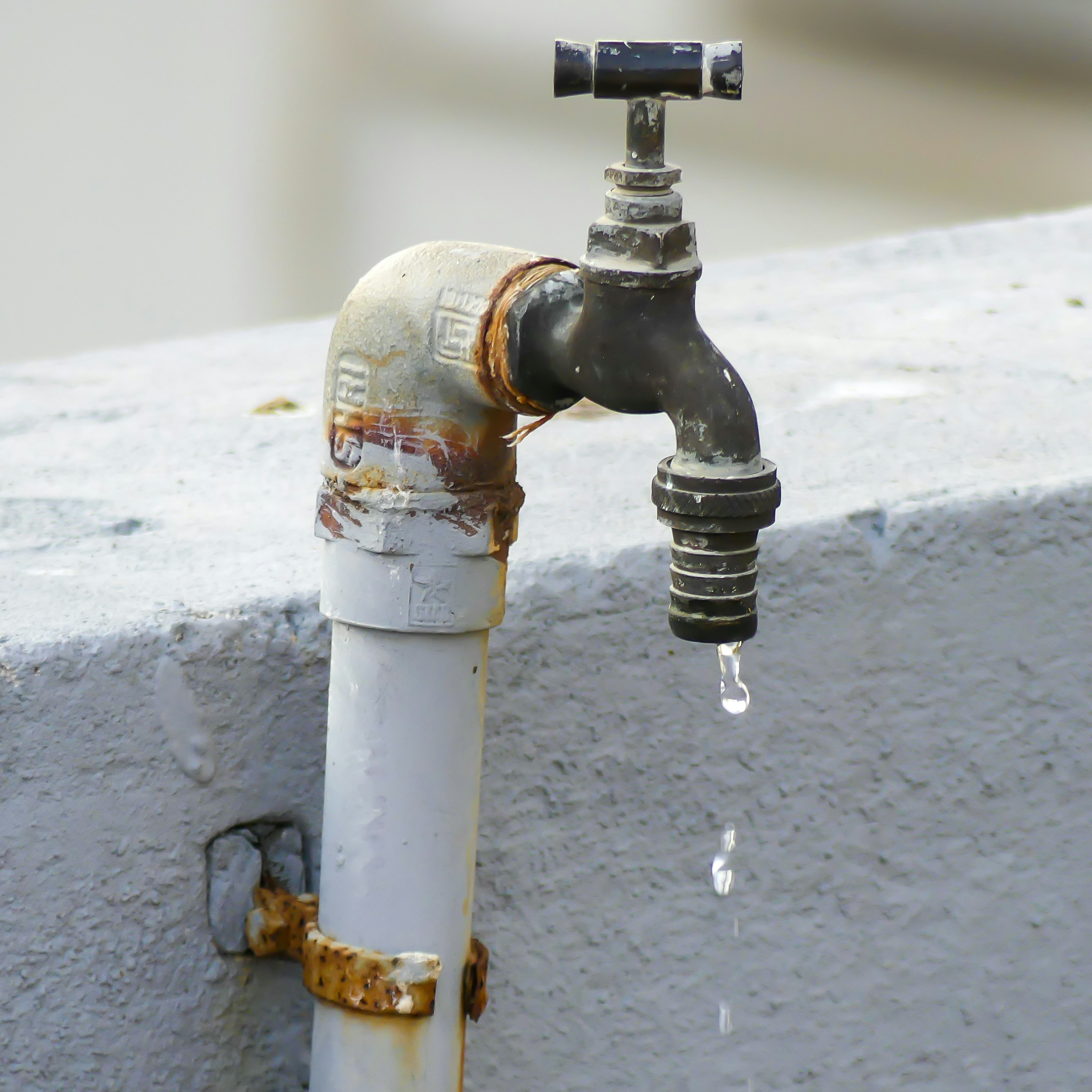
The ice does not split the pipe. That sounds like a technicality until you go looking for the leak in the wrong place. Research from the Building Research Council at the University of Illinois describes the sequence: freezing temperatures create an ice blockage, then continued ice growth puts very high pressure on the water trapped between that blockage and a closed faucet downstream. A separate study of PVC and CPVC systems by the Madison Group found the same thing, noting that failure often occurs at a remote section of pipe through an indirect mechanism. The pipe lets go where the water had nowhere to go, which can be feet away from the frozen section.
Twenty degrees is the number to watch
Texas A&M AgriLife Extension calls 20 degrees F the temperature alert threshold, citing University of Illinois tests in which water pipes in an unheated but insulated attic consistently started forming ice just below that mark. It is not a guarantee in either direction. What it gives you is a night to start paying attention on.
While you are watching the forecast, ignore the wind chill number. The National Weather Service is explicit that an inanimate object will not cool below the actual air temperature. Wind chill describes heat loss from skin. Its only effect on a pipe is to shorten the time the pipe takes to reach whatever the air temperature already is. Air at 25 degrees with a wind chill of minus 5 is still a 25-degree night for your plumbing.
There is no national frost depth
People quote four feet like it came down from somewhere. It did not. University of Missouri Extension puts frost depth in Missouri alone at 15 inches near New Madrid and 40 inches at the Iowa line, and adds that wet compacted soil with no snow cover can freeze two feet deeper than those figures. Boulder County, Colorado lists a local frost depth of 30 inches and then requires water service lines at 36. British Columbia’s agriculture ministry recommends burial from 24 inches on Vancouver Island to 72 inches in the Peace River country. Your number comes from your building department, and nowhere else.
Which pipe fails first
Here the sources pull apart. University of Missouri Extension states that plastic is renowned for busting before copper. The Madison Group’s measurements point the other way: PVC burst at 1,800 to 2,575 psig and CPVC at 1,875 to 2,200, over thirty times ordinary household pressure, and copper conducts heat so much faster than plastic that a copper line reaches freezing first. PEX has its own literature. The Plastics Pipe Institute’s freeze-break testing, reported through the American Society of Plumbing Engineers, found PEX expanding without splitting and returning to size on thaw through more than 400 freeze cycles.
Read that last one carefully, because the report itself notes installation variables that can still cause PEX to fail. Missouri Extension makes the more useful point. Freeze-resistant pipe does not give you a freeze-resistant system, because the float valves, fittings and connectors in the same line are not freeze proof. Put valves or unions at the low points so the line can be drained, and drain the aboveground runs.
The drip fight
Mississippi State Extension tells you how: a trickle that would fill a gallon pitcher in about an hour, from the faucet farthest from the meter, at roughly two cents a night. The Red Cross gives the same advice. University of Missouri Extension does not, on the grounds that widespread dripping strains water pressure and storage in public systems, which can cut into the water available for firefighting.
Worth knowing that both sides explain dripping as keeping water moving, while the failure research describes pressure trapped behind an ice plug. An open faucet relieves that pressure. No extension source I could find states the pressure-relief reason, so treat it as the likely mechanism rather than a sourced claim, and treat the Missouri objection as real if you are on rural district water.
Blowing out lines
Colorado State University Extension says draining alone does not get the job done, because buried pipe shifts over the years and there is no way to inspect a line once you think it is empty. Compressed air is the answer, within limits. Eighty psi maximum on rigid PVC, fifty on flexible polyethylene. Never run compressed air through a pressure vacuum breaker or reduced pressure backflow device, because the rubber seals inside can melt from the heat of the air. Those numbers come from irrigation guidance, and no source I found publishes equivalent limits for domestic supply lines, so treat them as the ceiling rather than the recipe.
Heat tape rules come from fire reports
The Consumer Product Safety Commission counted around 3,300 residential fires a year involving heat tapes or cables in a 1990 release, and about 1,500 fires with 10 deaths and 100 injuries in a 1996 one. Two CPSC numbers six years apart, differing by roughly half, which is worth noting rather than picking whichever is scarier. The rules attached to them are consistent:
- Wrap the tape directly on the pipe. Never over the top of pipe insulation.
- Do not overlap the tape on itself unless the manufacturer says to.
- Insulate over it with something non-flammable such as fiberglass. Not foam, not vinyl.
- Do not add more insulation than the manufacturer calls for, because over-insulation can start a fire.
- Grounded three-prong plug, into a GFCI-protected outlet.
- Replace uncertified tape more than three years old with a model listed to UL, CSA or FMRC.
CPSC reissued that guidance after a 1996 fire at the Philadelphia Zoo associated with electric heat tapes killed 23 primates. The agency is not writing about theoretical risk.
Yard hydrants are restricted in at least two states
The frost-free hydrant works by draining its standpipe into gravel below the frost line through a small port at the valve. That port is also an opening between your water system and the ground. Wisconsin prohibits underground stop-and-waste valves outright under administrative code SPS 382.40(8)(e)2, and spells out the scenario: a hose left in a barrel, water siphoning back through the drain port, and the barrel’s contents entering the groundwater or the drinking supply. Hydrants installed before September 1, 2001 are grandfathered unless they create a hazard, and every hose connection needs an approved vacuum breaker marked ASSE 1011 or ASSE 1052.
Indiana’s health department takes the same position by policy for facilities under its jurisdiction, listing complete seasonal drainage, heat protection, or a design without an external drain as the approved alternatives. British Columbia’s agriculture ministry, by contrast, describes routine installation of drain-back hydrants with coarse drain rock and an upturned plastic bucket to hold an air pocket, and recommends anti-siphon protection rather than banning the design. Three jurisdictions, three answers. Call your own before you dig one in.
Thawing, and the stock tank
Slow heat only. Texas A&M rules out blowtorches, kerosene and propane heaters, charcoal stoves and any open flame. Missouri Extension says a light bulb will do the job and that torches and kerosene heaters warm things too fast. Leave the faucet open while you work. Moving water helps melt the rest of the plug.
For livestock water, eXtension Farm Energy says to set tank heater thermostats at 32 to 34 degrees F. Groundwater arrives between 42 and 52 degrees, so a thermostat set any higher fires the element every time an animal drinks. While you have the cover off, a note from University of Minnesota Extension: their target is under 0.35 volt on the farm grounding system, with monitoring called for at 0.5 volt, and growing pigs have detected as little as 0.25 volt at a waterer. A tingle at the tank is a reason to call an electrician, not a quirk of the barn.
Sources
- Building Research Council, University of Illinois, An Investigation into Freezing and Bursting Water Pipes in Residential Construction
- The Madison Group, A Study of the Freezing Phenomena in PVC and CPVC Pipe Systems
- Texas A&M AgriLife Extension, Winter Storms and Frozen Pipes
- National Weather Service, Cold Weather FAQs
- University of Missouri Extension EQ380, Pumps and Watering Systems for Managed Beef Grazing
- University of Missouri Extension, Precautions to Avoid Frozen Pipes
- Boulder County, Colorado, Utility Depths B07
- BC Ministry of Agriculture, Livestock Watering: Winter Considerations
- BC Ministry of Agriculture, Livestock Watering: Frost-Free Hydrants
- American Society of Plumbing Engineers, on Plastics Pipe Institute TR-52 Freeze-Break Resistance
- Mississippi State University Extension, How to Properly Drip a Water Faucet
- American Red Cross, Frozen Pipes
- Colorado State University Extension, Preparing Your Sprinkler System for Winter
- U.S. Consumer Product Safety Commission, Check Heat Tapes and Cables for Possible Fire Hazards (1990)
- U.S. Consumer Product Safety Commission, Heat Tape Guidelines Reissued (1996)
- Wisconsin Department of Safety and Professional Services, Yard Hydrants in Wisconsin
- Indiana Department of Health, Policy on Frost-Free Hydrants
- U.S. EPA, Cross-Connection Control Manual
- eXtension Farm Energy, Livestock Watering Systems
- University of Minnesota Extension R-EF-11, Stray Voltage Problems with Dairy Cows