
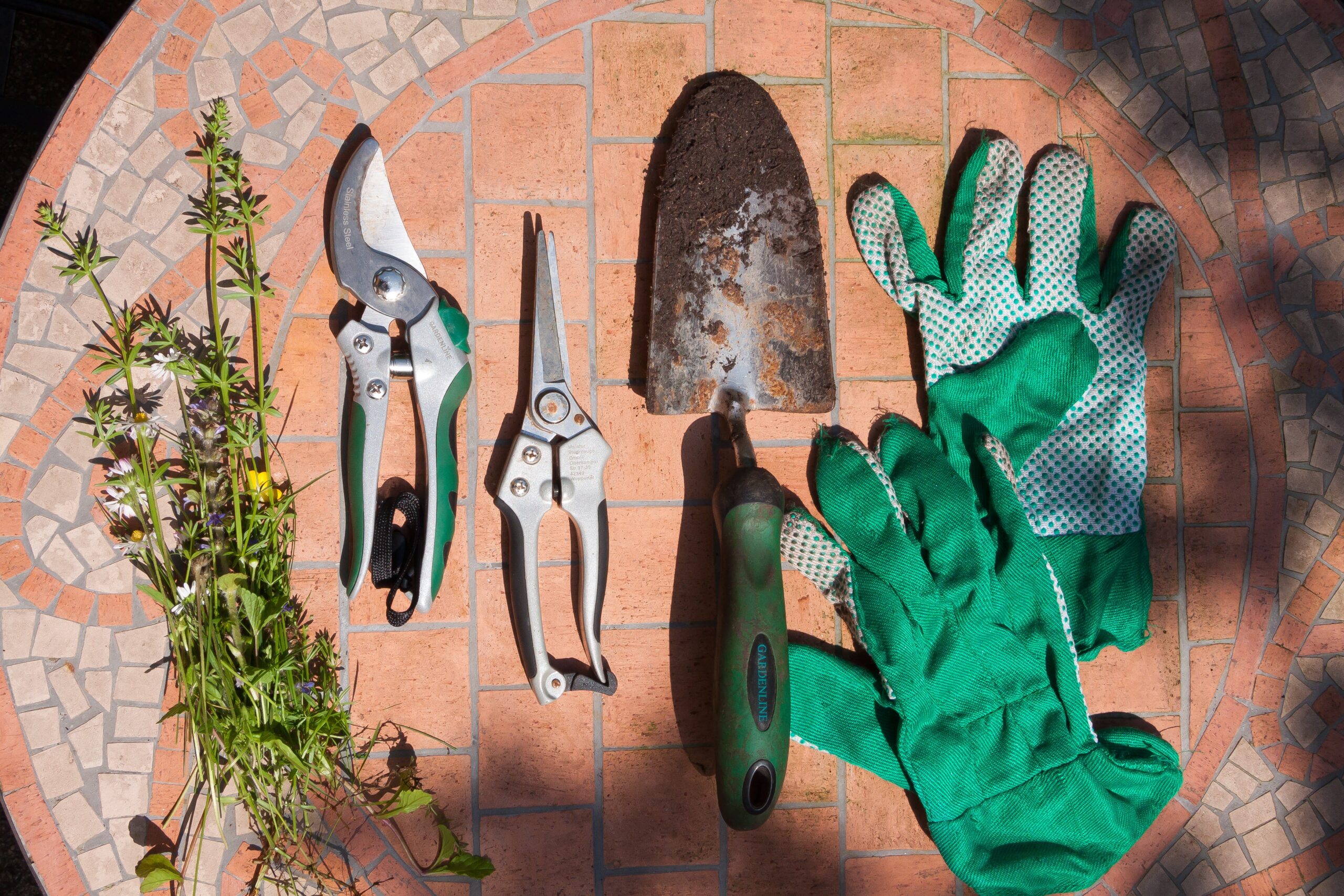
Ask four extension services what angle to sharpen a shovel to and you get four answers. K-State Research and Extension says 20 degrees for light-duty work and more for heavy digging. Oregon State says 20 to 25 across garden tools generally. University of Wisconsin-Madison says 30. Washington State says 45. That is a spread of more than double on one tool, and it is the first thing to understand before you pick up a file, because the number is less settled than any single page makes it sound.
My read: the low end is better supported. Oregon State, K-State and UC Agriculture and Natural Resources all give detailed procedure alongside their angles, and UC ANR puts single-beveled tools at 15 to 20 degrees. Washington State’s 45 is the outlier for hand tools. The one instruction every source agrees on is to follow the bevel already on the tool, which Wisconsin says of axes and Illinois says of pruners and loppers. A factory edge encodes a decision somebody made about that steel. Match it before you overrule it.
Angles worth writing on the shop wall
- Bypass pruners: 10 to 20 degrees, per K-State.
- Shovels and spades: 20 degrees light-duty per K-State, 30 per Wisconsin, 45 per Washington State.
- Grass-cutting tools: 20 to 22 degrees, per Wisconsin.
- Rotary mower blades: about 45 degrees, per Purdue Turfgrass Science.
- Axes: about 18 degrees on the clear-wood cutting side, up to 28 on the limbing side, with a microbevel around 25, per the USDA Forest Service.
The Forest Service axe guidance is the most careful document in this whole area, and it carries a detail the garden sources skip. Leave the toe and heel corners slightly thicker than the middle of the edge, giving a fan shape across the blade.
Which side gets the file
Oregon State splits the tool box cleanly. Hand pruners, loppers, shovels and hoes get sharpened on one side only. Grass shears, picks, mattocks and axes get both. K-State is more emphatic on pruners: sharpen the side away from the curved anvil, because working both sides damages the blade. On any single-bevel tool the flat back gets nothing but a light pass to knock the burr off, which UC ANR describes as running the file flush with that face to clear it.
Push, never pull
A file cuts on the forward stroke and does nothing on the way back except wear itself out. The Forest Service, K-State, Wisconsin, Oregon State and UC ANR all say so independently. Lift at the end of each stroke. No sawing back and forth. Run the stroke parallel to the blade, full length, even pressure from tip to base.
Sizes: a 6-inch smooth file for softer steel like hand pruners, an 8- to 10-inch mill file for hard steel like shovels and loppers, per Oregon State. Illinois Extension adds the warning worth taking seriously. Do not use power grinders, because friction heat makes the metal brittle. The Forest Service gives you the visual tell, metal turning shades of blue or purple.
The pruner disinfectant argument
This one has no clean answer and anybody who gives you one is picking a side without telling you. Three positions are live in current extension guidance.
The alcohol camp: University of Missouri IPM, University of Arizona and Wisconsin all put 70 percent isopropyl first, wiped or dipped with no soak, with Wisconsin allowing 10 percent bleach or preferably alcohol for at least 30 seconds. The quaternary ammonium camp: University of Tennessee has moved alcohol onto its not-recommended list on corrosion grounds and recommends products like GreenShield with a soak of at least a minute, while Linda Chalker-Scott at Washington State recommends household cleaners at full strength rather than alcohol. Minnesota lands there too, with Lysol All-Purpose at a two-minute soak and a note that it does not corrode metal. The bleach camp: Arkansas and NC State both give a 1-to-9 bleach solution, though Minnesota explicitly restricts bleach to shovels, spades and rakes and says to keep it off cutting tools entirely.
Now the number that should make you cautious about any of it. For the identical 10 percent bleach solution, Minnesota says it kills within seconds, Wisconsin says at least 30 seconds, Iowa State says at least 10 minutes, and Missouri IPM says 30 minutes. That is a sixtyfold spread on the same chemistry. Missouri adds that a bleach solution is half as effective after two hours, so a jar sitting on the bench all afternoon is doing less than you think.
Two things the sources do agree on. Corrosion ranking comes from Teviotdale and colleagues in 1991, cited by both Chalker-Scott and Arizona: Lysol least corrosive, bleach most. And no extension source recommends disinfecting between every cut. Arizona says before pruning and between plants. Chalker-Scott makes it conditional on the pathogen, which is the most useful framing of the lot: soil-borne and air-borne diseases do not spread on your blades, vascular pathogens and oozing cankers do. One documented exception, from Iowa State: alcohol is not recommended on apple trees with fire blight.
Rust, oil, and the rag that burns your shed down
Washington State soaks rusty tools in a 1-to-1 vinegar and water solution for 24 hours, then goes at them with steel wool. Oregon State uses a wire brush followed by 400 to 600 grit paper. Wisconsin suggests coarse steel wool or lump pumice.
For handles, K-State is specific: boiled linseed oil, not raw. And here is the hazard most tool-care articles leave out. Linseed-soaked rags can ignite on their own. Wisconsin says so in one line, Washington State says to let oily rags dry spread out in open air, and six other extension pages recommend linseed oil with no warning attached at all. Spread the rag flat outdoors or drown it in water. Do not wad it in a bucket in a closed shed.
The oiled sand bucket turns out to be real extension advice rather than folklore. Oregon State describes a 5-gallon bucket four-fifths full of sand with about a quart of engine oil, calling the oil optional, and tools plunged in after each day’s use. Washington State uses sand or kitty litter moistened with mineral or linseed oil. NC State and K-State both describe the same setup. I went looking for an extension source warning against the method and did not find one.
Hoses, sprayers, fuel, batteries
Drain hoses and hang them to dry before coiling, says Purdue, and store them loosely coiled somewhere dry. Sprayers get more work. Penn State says to pull the filters, nozzles, check valves and screens, wash them by hand, then store the metal ones in vegetable oil to stop rust pitting. Remove pressure gauges and cap the openings. If you winterize with antifreeze, use RV antifreeze with corrosion preventer already in it, blow the water out first, and circulate until pink comes out of the nozzles. Never use liquid fertilizer for this, because it corrodes and crystallizes in the cold.
Fuel is another split. University of Georgia says empty the tank into an approved container and then crank the engine several times to clear the carburetor, because untreated ethanol fuel left sitting attacks rubber components, clogs carburetors and cracks fuel lines. Its threshold for bothering is three to four weeks of storage. Purdue lands the same way, run it dry. Oklahoma State accepts either running it out or filling with fresh gas plus stabilizer, with a qualifier worth repeating: stabilizer only stops deterioration, it cannot reverse it. Stale gas plus stabilizer is still stale gas. Batteries come out and go somewhere cool and dry that will not freeze.
How to tell it needs doing
K-State’s test takes two seconds. Hold the edge up to a light. If light reflects off the edge, there is still a flat there and it is not sharp. Washington State’s version works on the plant instead: a dull blade crushes the stem rather than cutting it. Purdue says the same thing about turf, where dull mower blades tear the grass and leave ragged tips that give the lawn a whitish cast from a distance, and puts mower blade sharpening at four to six times a season. For pruners, Oregon State says start, middle and end of the pruning season, and K-State says every six weeks even under heavy use.
Sources
- Oregon State University Extension, Sharpening Garden Tools
- Oregon State University Extension, Care and Maintenance of Garden Tools
- K-State Research and Extension MF3288, How to Clean and Sharpen Garden Tools
- University of Wisconsin-Madison Extension, Maintaining Lawn and Garden Tools
- Washington State University Extension, Tool Maintenance
- University of California Agriculture and Natural Resources, Tool Sharpening for Single Beveled Tools
- USDA Forest Service, An Ax to Grind: Sharpening
- Purdue University Turfgrass Science, Sharpen Mower Blades
- University of Illinois Extension, Garden Tool Maintenance
- University of Minnesota Extension, Clean and Disinfect Gardening Tools
- Iowa State University Extension, How Do I Sanitize My Pruning Shears
- University of Tennessee Extension, Disinfectants for Pruning Tools
- University of Missouri IPM, Cleaning Pruning Tools
- Linda Chalker-Scott, Washington State University Extension, on pruning and tool disinfection
- University of Arizona Cooperative Extension, Sanitizing Pruning Tools
- University of Arkansas Cooperative Extension, How to Clean Garden Tools
- NC State Extension, Garden Tool Care
- Purdue University Consumer Horticulture, Prepare Garden Tools and Equipment for Winter
- Penn State Extension, Winterize Your Sprayers
- University of Georgia Extension, Winterizing Motorized Equipment
- Oklahoma State University Extension, Grow Gardening Column