
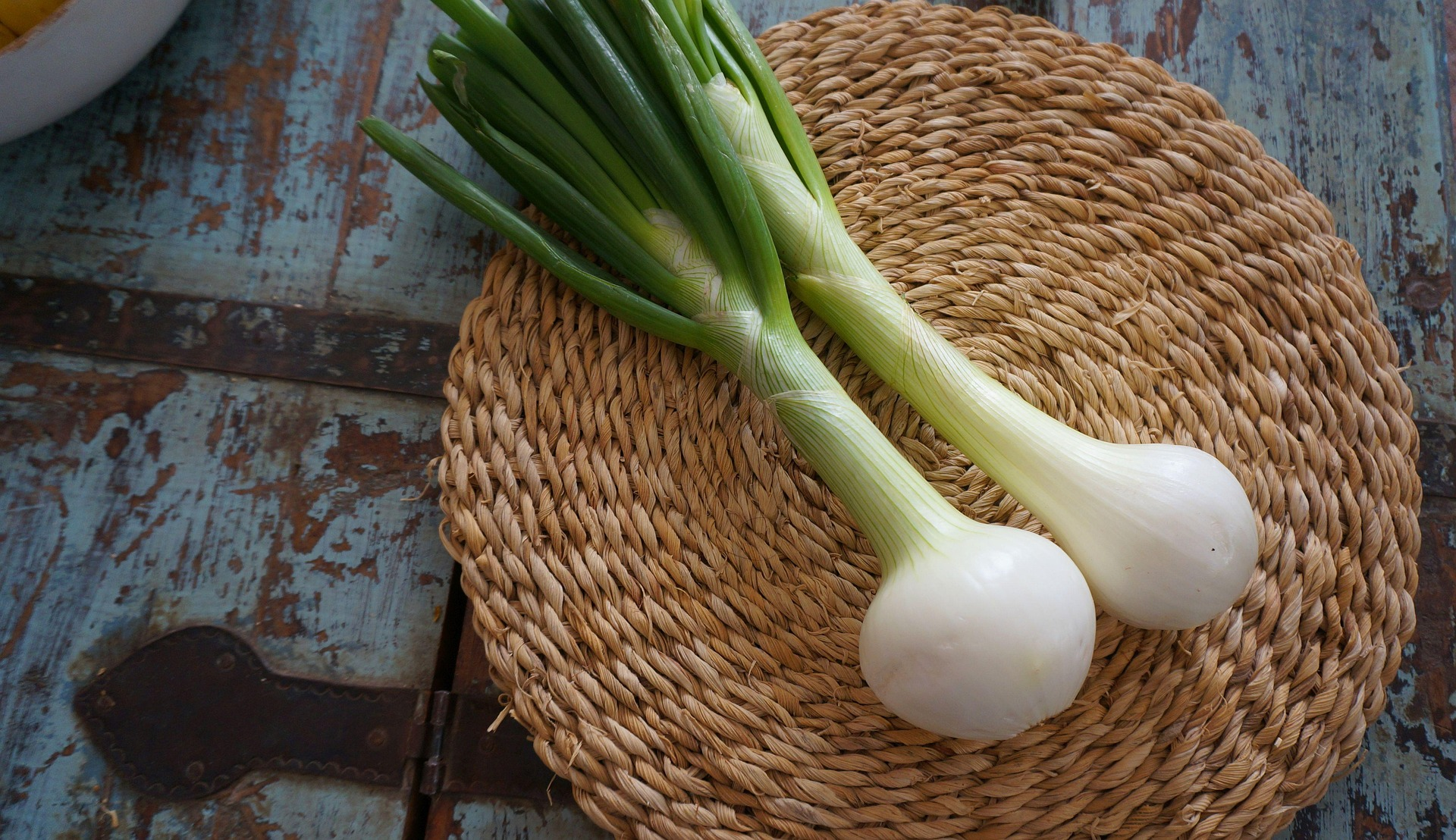
Buy the wrong day-length class and nothing else you do in January matters. Long-day onions start bulbing at 14 hours or more. Short-day types bulb at 10 to 12 hours, intermediate types somewhere between. Wisconsin states the line in one sentence: short-day onions are not grown above 30 degrees latitude.
Only UC Santa Cruz publishes the whole scheme. Above the 40th parallel, long and very long-day varieties. Between 28 and 40 degrees, intermediate-day. Below 28, short-day. Six other acceptable publications give the hour thresholds and no latitude at all, and none of them prints a map.
The reason the class decides everything is in one Iowa State sentence. Bulb size comes from the number and size of the leaves at the moment bulbing begins. UNH adds that each leaf becomes a ring. So a short-day onion in a northern garden starts bulbing while it still has a few leaves, and it finishes small no matter how well you fed it. Texas A&M notes that no bulbing happens below 50 to 60 degrees at all.
How early to sow, and the four-times spread
WSU says 4 to 8 weeks before transplanting. Virginia Tech, Utah State and UMaine all say 8. Iowa State says 8 to 10, SDSU says about two months, and Minnesota, Wisconsin, Penn State and UC Santa Cruz all say 10 to 12. UNH goes to 10 to 15 weeks. That is nearly a fourfold range for one crop.
Leeks split the same way. UMass and Utah State say 6 to 8 weeks. UC Santa Cruz says 10 to 12, and adds the useful aside that books often say 4 to 8.
Nobody is wrong, because the target is a size rather than a date. Pick the size you want at transplanting, then count backward from the date your ground is workable. A 10-week start in a cold room and a 6-week start under good light can arrive at the same plant.
What size you are aiming for
Here the sources stop agreeing about which part to measure. WSU transplants at 3 inches tall. NC State and Clemson want 6 inches tall and half the thickness of a pencil. Wisconsin and the Utah State production manual both give a quarter inch of stem diameter. SDSU says two or three leaves. UMass says bulbs the size of peas.
Height and diameter are not the same measurement, and that matters more than the numbers. A 6-inch seedling grown under weak light can be thinner than a 3-inch one grown well. Use the diameter figure and treat height as a side effect.
The size target collides with the bolting threshold
Read those two sections next to each other and a problem appears. UC Santa Cruz gives the clearest statement of what triggers flowering: a stem over a quarter inch in diameter, 10 or more days under 50 degrees, then warmth and lengthening days. Wisconsin says sets a quarter inch or smaller reduce bolting risk, and puts the cold exposure at 40 to 50 degrees for one to two months.
So the quarter inch that Wisconsin wants at transplanting is the same quarter inch that UC Santa Cruz names as the bolting threshold.
The other published figures run bigger. Utah State says 5/8 inch. Iowa State says half to three-quarters. Clemson, Virginia Tech and SDSU all say an inch. Illinois measures against a dime. Those larger numbers are mostly about sets, which are second-year bulbs with a season of growth behind them, not about a seedling in a flat. Texas A&M puts it another way: bolting depends on temperature, not day length, and pencil-size plants held in the low to mid 40s bolt more.
What that leaves you is a sequence, not a number. Grow the seedling to about a quarter inch, then do not let it sit through a long cold spell on either side of transplanting. NC State gives the one field fix in the literature for plants that got too big: undercut about 2 inches below the soil surface.
Light, where no two sources use the same unit
Minnesota gives footcandles and PPF, a lamp 4 to 6 inches above the seedlings, and 16 to 18 hours a day. Clemson and UMaine give inches and hours only, 2 to 4 inches and about 16 hours. Wisconsin asks for at least 10 hours for onions. Missouri gives footcandles for houseplants. Illinois gives hours and calls 18 the maximum.
UNH is the only one that lets you check your own fixture. It sets the target at 12 moles of light per square meter per day, then works out run times. A four-bulb T8 shop light needs about 22 hours a day. The same target takes about 10 hours under a horticultural purple LED. A cheap purple LED would need 34. UNH calls that impossible. One tested LED bar needed 8 hours at 8 inches above the crop and 16 hours at 20 inches.
Distance is doing more work than wattage in that table, which is why every other source prints inches. Keep the room cool while you are at it. Iowa State puts onion seedlings at 55 to 65 degrees and says above 65 brings spindly growth.
One caveat from UNH is worth more than the rest. Added light will not shorten a stem that already stretched. It only stops further stretching. A leggy flat stays leggy.
Trimming the tops
Four acceptable sources do recommend it. Iowa State clips seedlings back from 5 inches to 4, sometimes twice or more before planting. Minnesota trims tops to 4 inches and roots to half an inch at transplanting. Wisconsin clips to 5 inches. SDSU trims to about 3 inches when the leaves droop.
Not one of them gives a yield or bulb-size reason for doing it. Where it appears, it is a handling practice for getting a plant into the ground, or a response to flopping. If you were trimming because you read that it makes bigger onions, that claim has no source behind it.
Then test the seed you already have
Onion seed is the shortest-lived seed in the garden. Illinois, Colorado State and Iowa State all put onion at 1 year and leek at 2. Oregon State is the outlier at two to three years for both. Iowa State’s onion page settles it by telling you to buy fresh every year.
Storage explains the gap. Colorado State wants seed under 8 percent moisture and below 40 degrees. At 15 percent relative humidity seed dries to about 6 percent and keeps for several years. At 90 percent it only reaches 19 percent, and germination is poor after one year. Penn State turns that into one rule worth remembering: storage temperature in degrees plus percent humidity should stay under 100.
So do the test before you do the arithmetic on sowing dates. Iowa State’s protocol takes a paper towel and a month of lead time: at least 20 seeds, 50 better, 100 best, rolled damp and held at 70 to 80 degrees. Check after two or three days, then daily for a week. Ninety percent or better is good seed. Fifty percent or lower means buy more, and in January you still have time to. That is also the number that tells you whether last year’s catalog order was worth repeating, and it belongs in the same notebook as your bed records.
Sources
- Iowa State University Extension, What Is a Long-Day Type Onion Variety?
- Iowa State University Extension, All About Onions (2024)
- Iowa State University Extension, When Should I Sow Onion Seeds Indoors? (2024)
- Iowa State University Extension, How to Store Seeds and Test Germination Rates (2023)
- Iowa State University Extension, Germination Requirements for Annuals and Vegetables (2023)
- University of Wisconsin-Extension, Growing Onions, Garlic, Leeks, and Other Alliums in Wisconsin (A3785) (2003)
- University of California Santa Cruz CASFS, Growing Onions and Leeks
- University of Minnesota Extension, Growing Onions in Home Gardens (2024)
- University of Minnesota Extension, Lighting for Indoor Plants and Starting Seeds (2026)
- University of New Hampshire Extension, How Do I Get My Onions to Grow Bigger? (2020)
- University of New Hampshire Cooperative Extension, Growing Seedlings Under Lights (2020)
- Washington State University Extension, Growing Onions in Home Gardens (FS097E) (2013)
- Virginia Cooperative Extension, Onions, Garlic, and Shallots (426-411) (2026)
- Utah State University Extension, How to Grow Onions in Your Garden (2020)
- Utah State University Extension, How to Grow Leeks in Your Garden (2020)
- Utah State University Extension, Onion Health Management and Production (2013)
- South Dakota State University Extension, Onions: How to Grow It (2024)
- NC State Extension, Bulb Onions (2025)
- Clemson Cooperative Extension, Onion, Leek, Shallot and Garlic (2023)
- Clemson Cooperative Extension, Starting Seeds Indoors (HGIC 1259) (2020)
- Texas A&M AgriLife Extension, Onion
- University of Maine Cooperative Extension, Starting Seeds at Home (Bulletin 2751) (2021)
- Penn State Extension, Seed and Seedling Biology (2025)
- University of Illinois Extension, Will My Seeds Still Grow? (2021)
- University of Illinois Extension, Onion
- University of Illinois Extension, Supplemental Lighting for Indoor Seed Starting (2020)
- Colorado State University Extension, Storing Vegetable and Flower Seeds (7.221) (2025)
- Oregon State University Extension, How Long Do Garden Seeds Last?
- Oregon State University Extension, Soil Temperature Conditions for Vegetable Seed Germination (2024)
- University of Missouri Extension, Lighting Indoor Houseplants (G6515)
- UMass Amherst Center for Agriculture, Food and the Environment, Onions and Related Crops: Growing Tips
Leave a Reply