
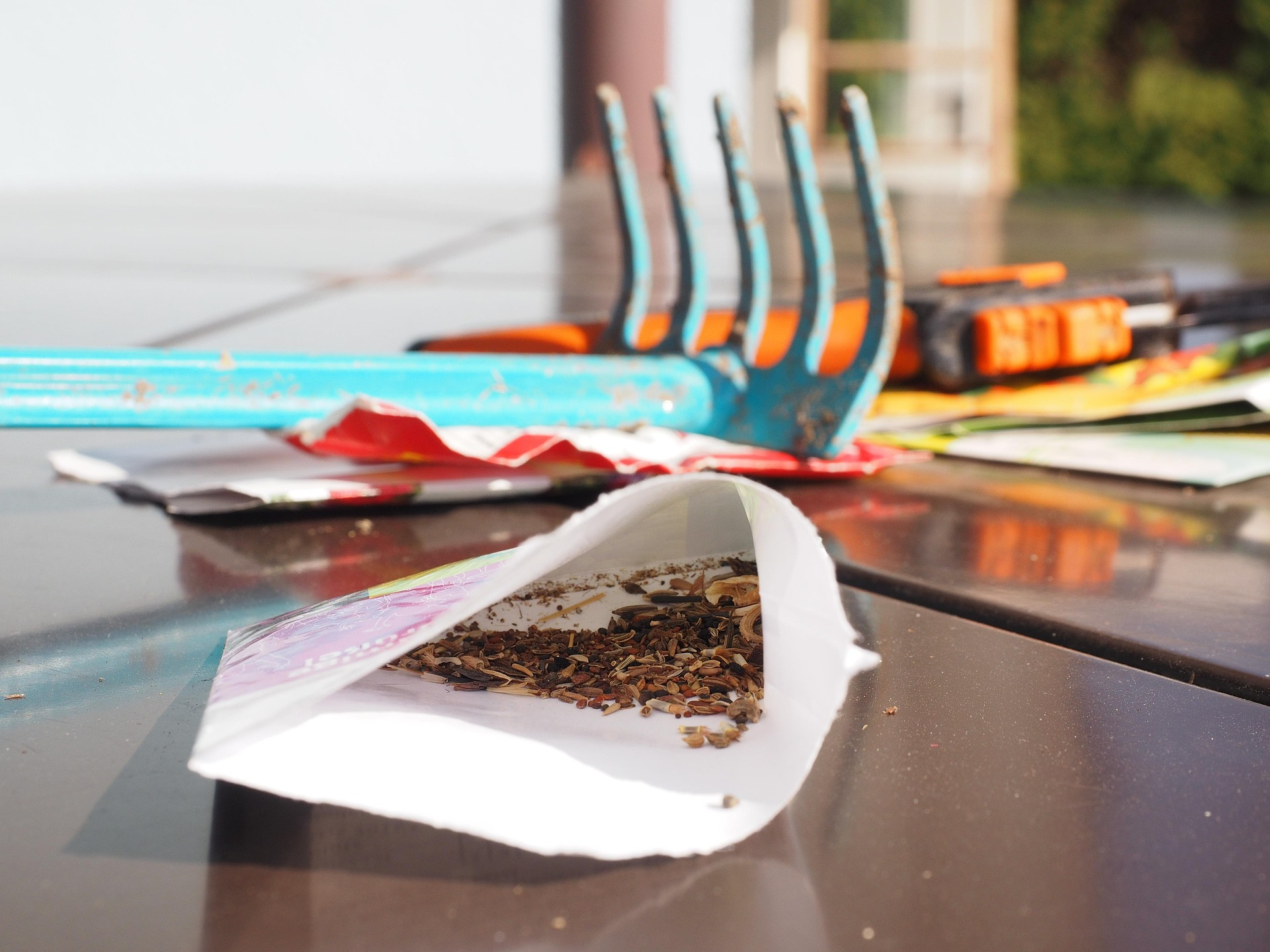
A seed packet does not have to tell you its germination rate. Under federal law, a vegetable packet of a pound or less that meets the minimum standard need not show the germination percentage or the test date. That one fact changes how to read the rest of the catalog. The legal promise is thin, and the useful parts are the ones nobody checks.
What the packet must say
The Federal Seed Act rules, at 7 CFR Part 201, require a garden packet to show the kind and variety, the word “hybrid” if it is one, and the name of the shipper or an approved code. Lot number and weed seed disclosure apply only to containers over a pound. The rules ask for no country of origin on vegetable seed at all.
Germination works backward from what most gardeners expect. If seed falls below the federal minimum, the packet must say “Below Standard” in 8-point type and print the actual percentage. So a missing germination number is the passing grade. The minimums are not high. Tomato and squash must reach 75 percent. Lettuce, cucumber, pea and turnip need 80. Pepper and carrot need only 55.
Georgia Extension’s home garden bulletin tells readers to make sure germination percentage and test date “are marked on each package.” Federal law says they need not be. Some states ask for more. Minnesota requires a home garden packet to show the year it was packed for and a lot number. But a gardener following Georgia’s advice would reject packets that are fully legal.
“Hybrid” is the one catalog word with a legal floor. Seed labeled hybrid must be at least 75 percent hybrid, and between 75 and 95 percent it must say so. “Open-pollinated” and “heirloom” appear nowhere in the federal rules. Illinois Extension gives heirlooms an age of more than 50 years. No other source repeats that figure, so treat heirloom as a story, not a spec.
The disease codes
The letters after a variety name, such as V, F, N and PM, stand for diseases the breeder claims resistance to. Purdue Extension warns that the codes can vary between catalogs. The extension lists do too. One Illinois Extension article writes tobacco mosaic virus as TMV. Another, from the same year, writes it as T. NC State writes early blight as EB, and Georgia writes it as AB.
Resistance is not immunity. Cornell says resistance “is rarely complete” and some symptoms usually develop when conditions favor the disease. Cornell also found that powdery mildew resistance in cucurbits other than squash and pumpkin is not enough alone to protect yield.
The most useful line in the whole subject comes from the multi-state Mid-Atlantic vegetable guide. The resistance claims in its variety tables come from seed companies or university trials and “are not necessarily verified by Cooperative Extension.” The catalog’s resistance column is the company’s own claim.
“Tolerance” is worse. Cornell says catalogs use “intermediate resistance” or “tolerance” for resistance from one parent, against “high resistance” from both. Cornell advises picking resistance from both parents when you can. UC’s pest management glossary defines tolerance differently, as a plant that grows in spite of infection. Iowa State uses resistance and tolerance as the same thing. So a catalog that says “tolerant” could mean fewer symptoms, or a sick plant that still yields. Prefer a variety listed as highly resistant to the disease that actually shows up in your garden.
Days to maturity is a rough guess
Start with what it counts from. Oregon State Extension says the count runs from seeding for crops sown in the ground and from transplanting for crops started inside. Penn State and Purdue both say it simply counts from transplanting. For a tomato, all three agree. For direct-sown beans or carrots, only Oregon State’s version makes sense.
Then treat the number loosely. Oregon State’s degree-day guide says catalog calendar-day figures are a poor guide to harvest date. For sweet corn, calendar days missed by 1.5 to 22 days, while degree-day models were within about 3. ‘Arcadia’ broccoli took anywhere from 66 to 103 days, depending on planting date and year.
A Cornell leek trial in New York printed the catalog figure beside the real one for 14 varieties. The catalog gave Defender 150 days, and it matured in 102. It gave Lancelot 100, and Lancelot took 158. The report’s own summary then says every variety was harvested on time or early, while its table shows three that ran late. One trial, under heavy disease pressure, so read it as a warning rather than a rule. The listed number can be off by weeks in either direction.
For a short season, your own records beat the catalog. Oregon State notes that growers’ records of calendar days can be as good as the degree-day models. That is what a garden journal is for, as covered in planning next year’s beds from this year’s records.
Hybrid or open-pollinated
Maryland Extension states it plainly: seed saved from an F1 hybrid “does not ‘come true’ when planted the following year.” Missouri names hybrid vigor and says it does not carry to the next generation. Georgia says hybrids usually outyield other types. None of them puts a number on the yield gain. Buy a hybrid when its resistance list matches a disease you fight every year. Buy open-pollinated when you mean to save seed, as in saving seeds from this year’s garden.
Treated and pelleted seed
Treated seed must say so on the label in 8-point type and name the chemical. Minnesota Extension’s handling rules are short. Wear gloves, do not compost leftover treated seed, and never burn it in a stove. The preferred disposal is to plant it out.
A pellet coating makes tiny seed easier to space. Illinois Extension says pelleted seed is viable for only one year. The Mid-Atlantic guide says coating “may or may not” reduce germination and recommends a test before reusing stored seed. Illinois’ own seed-life table gives bare lettuce six years and tomato four, so its pellet claim implies a large storage penalty that no measurement backs. Order pellets in the amount you will sow this year.
Before you order
Test what you already have. Illinois Extension’s method is ten seeds on a damp paper towel in a sealed bag, kept warm. If all ten sprout, plant as usual. Seven to nine, sow thicker. Six or fewer, buy new seed. Store what is left where temperature in °F plus relative humidity stays under 110, which the Mid-Atlantic guide sets as the limit.
Then judge new varieties on local results. Georgia notes some varieties do well in north or south Georgia, but not both. Illinois tells gardeners to favor All-America Selections winners from their own region over national ones. The Mid-Atlantic guide advises trying any new variety on a small scale for two to three years, next to a standard one.
Sources
- USDA Agricultural Marketing Service, 7 CFR Part 201, Federal Seed Act Requirements: Labeling Vegetable Seeds (2020)
- Minnesota Department of Agriculture, Labeling Seed for Home Gardeners in Minnesota (2023)
- University of Georgia Cooperative Extension, Home Gardening (2022)
- University of Georgia Cooperative Extension, Disease Management in the Home Vegetable Garden (2022)
- Purdue Extension, Deciphering Seed Catalog Lingo (2023)
- University of Illinois Extension, Catalog Code (2016)
- University of Illinois Extension, Tomato Terminology (2016)
- University of Illinois Extension, Grow Confidence When Choosing Seed Packets for Your Garden (2023)
- University of Illinois Extension, Pelleted Seeds Improve Planting Ease, Germination Rates (2022)
- University of Illinois Extension, Will My Seeds Still Grow? (2021)
- University of Illinois Extension, Explore 2025 All-America Selection Plant, Flower Award Winners (2025)
- NC State Extension, Growing Tomatoes in the Home Garden (2026)
- Cornell University, Tips on Using Resistant Varieties for Managing Plant Diseases (2022)
- Cornell University, Cucurbit Powdery Mildew (2024)
- Cornell Cooperative Extension, 2021 Leek Variety Trial (2021)
- University of California Statewide IPM Program, Glossary (2024)
- Iowa State University Extension and Outreach, Selecting Disease Resistant Plants (2025)
- University of Maryland Extension et al., Mid-Atlantic Commercial Vegetable Production Recommendations: General Production Recommendations (2024)
- University of Maryland Extension, Vegetables Not True to Type (2023)
- University of Missouri Extension, Saving Seeds Not a Good Investment (2018)
- Oregon State University Extension Service, What Does “Harvest Date” Mean on My Seed Packets? (undated)
- Oregon State University Extension Service, Vegetable Degree-day Models: An Introduction for Farmers and Gardeners (2021)
- Penn State Extension, Season Extenders and Growing Fall Vegetables (2024)
- University of Minnesota Extension, Safe Handling of Treated Seed (2019)
Leave a Reply