
How to Store Potatoes Long Term: The Complete Guide to Keeping Your Harvest Fresh for Months
Picture this: You’ve just brought home a fantastic haul of potatoes from the farmers market or harvested a bumper crop from your garden. Now what? The difference between enjoying those spuds for months to come and watching them turn into a sprouted, shriveled mess comes down to proper storage techniques.
Whether you’re a homesteader looking to preserve your harvest, a bulk buyer seeking to save money, or simply someone who wants to reduce food waste, learning how to store potatoes long term is an invaluable skill. When done correctly, potatoes can remain fresh and edible for 4-6 months or even longer, providing you with a reliable food source throughout the year.
In this comprehensive guide, I’ll walk you through everything you need to know about long-term potato storage, from selecting the right varieties to creating optimal storage conditions. You’ll discover the science behind potato preservation and learn professional techniques that will help you maintain quality, flavor, and nutritional value for the long haul.
Understanding Potato Storage Basics
Before diving into specific storage methods, it’s essential to understand what makes potatoes tick. Potatoes are living organisms that continue to respire after harvest, making them susceptible to various environmental factors that can accelerate deterioration.
What Causes Potatoes to Spoil?
Several factors contribute to potato spoilage:
- Moisture: Excess humidity promotes bacterial and fungal growth
- Light exposure: Triggers chlorophyll production and toxic solanine development
- Temperature fluctuations: Causes starch conversion and sprouting
- Physical damage: Creates entry points for pathogens
- Ethylene gas: Produced by certain fruits and vegetables, accelerates aging
Understanding these enemies of potato preservation is your first step toward successful long-term storage.
Choosing the Right Potato Varieties for Long-Term Storage
Not all potatoes are created equal when it comes to storage longevity. If you’re serious about learning how to store potatoes long term, variety selection is paramount.
Best Potato Varieties for Storage
Late-season varieties typically store better than early varieties due to their thicker skins and lower moisture content:
- Russet Burbank: Excellent storage variety, lasts 4-6 months
- Katahdin: Dense flesh, stores 5-7 months
- Yellow Finn: Good storage potential, 4-5 months
- Kennebec: Versatile and long-lasting, 5-6 months
- German Butterball: Superior keeper, 6-8 months
- Elba: Commercial storage variety, 6+ months
- Yukon Gold: Moderate storage life, 3-4 months
Varieties to Avoid for Long-Term Storage
Early-season and thin-skinned varieties generally don’t store well:
- Red Pontiac
- Irish Cobbler
- Most fingerling varieties
- New potatoes (any variety harvested early)
Pre-Storage Preparation: The Curing Process
One of the most critical yet overlooked steps in how to store potatoes long term is the curing process. This crucial stage prepares potatoes for extended storage by allowing their skins to toughen.
How to Cure Potatoes Properly
Step 1: Harvest at the Right Time
Wait until potato vines have died back completely before harvesting. This indicates the skins have set properly.
Step 2: Handle with Care
Treat potatoes gently during harvest to minimize bruising and cuts. Use your hands or a potato fork rather than a sharp spade.
Step 3: Remove Excess Soil
Brush off dirt gently without washing. Never wash potatoes intended for long-term storage, as moisture invites rot.
Step 4: Curing Environment
Place potatoes in a dark location with these conditions:
- Temperature: 50-60°F (10-15°C)
- Humidity: 85-95%
- Duration: 10-14 days
- Good air circulation
Step 5: Sort and Inspect
After curing, remove any damaged, cut, or diseased potatoes. These should be used immediately, not stored.
Creating Optimal Storage Conditions
Now we arrive at the heart of how to store potatoes long term: establishing and maintaining ideal storage conditions.
The Perfect Potato Storage Environment
Temperature: 38-40°F (3-4°C)
This is the sweet spot for long-term potato storage. At this temperature range:
- Respiration slows dramatically
- Sprouting is inhibited
- Sugar conversion is minimized
- Quality is maintained
Important: Never store potatoes below 38°F, as temperatures below this trigger the conversion of starch to sugar, resulting in an undesirably sweet flavor and potatoes that brown during cooking.
Humidity: 90-95%
High humidity prevents moisture loss and shriveling while not being so high that it promotes decay. This can be challenging to maintain but is crucial for success.
Darkness: Complete
Even minimal light exposure causes greening and solanine production, making potatoes bitter and potentially toxic. Your storage area must be completely dark.
Ventilation: Good Air Circulation
Stagnant air promotes moisture accumulation and disease. Ensure adequate airflow without creating drafts that could dry out potatoes.
Best Storage Methods for Long-Term Potato Preservation
Let me share several proven methods for how to store potatoes long term, ranging from simple to more sophisticated approaches.
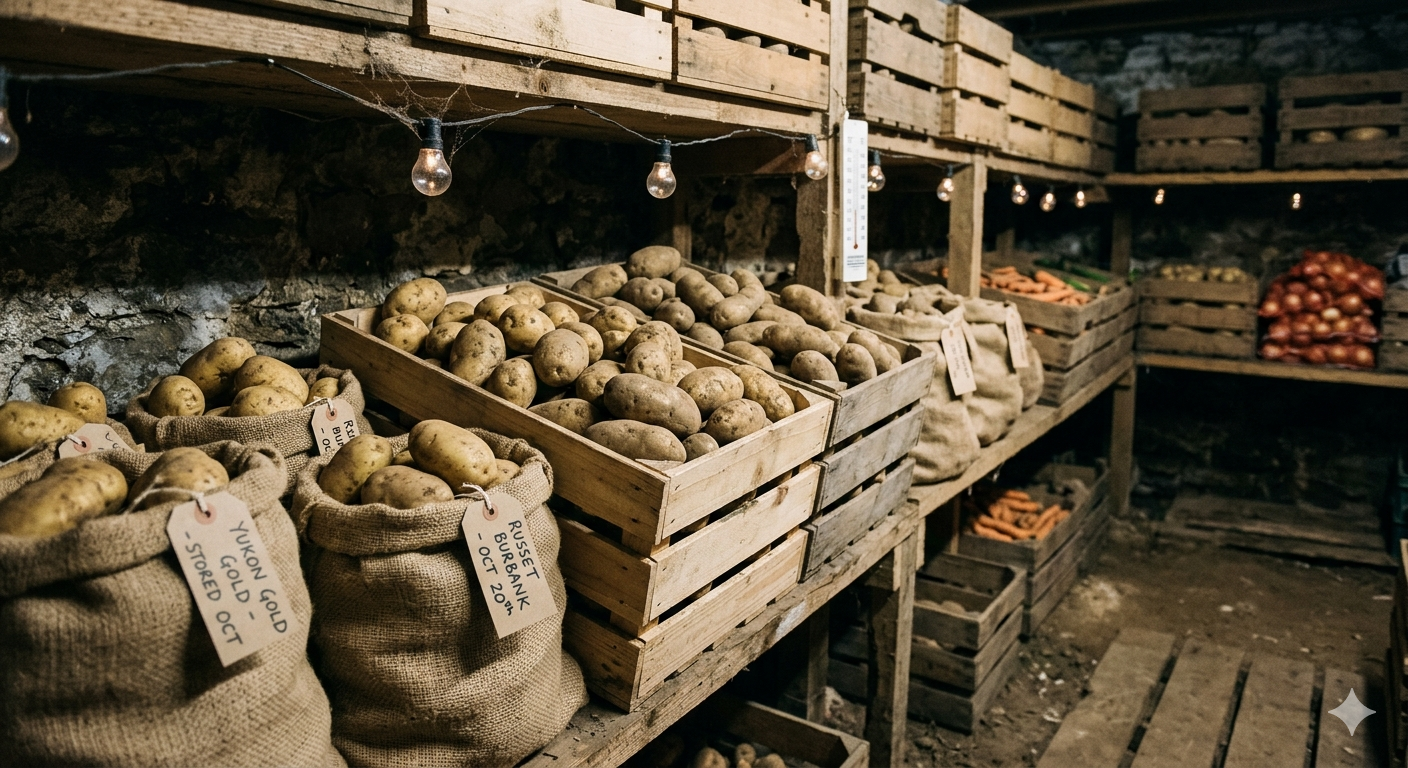
Method 1: Root Cellar Storage (Traditional Method)
Root cellars are the gold standard for long-term potato storage.
Setup:
- Natural underground location
- Insulated walls maintain stable temperatures
- Ventilation pipes for air circulation
- Humidity naturally stays high
Storage technique:
- Store potatoes in wooden crates, cardboard boxes, or burlap sacks
- Keep containers off the floor on pallets or shelves
- Leave space between containers for airflow
- Check regularly for spoilage
Capacity: Hundreds of pounds
Expected storage time: 5-8 months
Method 2: Basement Storage (Urban Alternative)
Most modern basements can work with modifications.
Setup:
- Choose the coolest corner, typically on north side
- Install a thermometer and hygrometer
- Add humidity sources (pans of water) if needed
- Block all light sources
- Consider a small fan for circulation
Storage containers:
- Ventilated plastic bins with holes drilled in sides
- Cardboard boxes lined with newspaper
- Paper bags (double-bagged for strength)
- Never use plastic bags, which trap moisture
Expected storage time: 3-5 months
Method 3: Outdoor Clamp Storage
An old-fashioned but effective method for cold climates.
Instructions:
Expected storage time: 4-6 months (winter only)
Method 4: Refrigerator Storage (Small Quantities)
While not ideal, refrigerators can work for smaller amounts with caveats.
Best practices:
- Store in paper bags in crisper drawer
- Set temperature to warmest setting (around 40°F)
- Place away from ethylene-producing items
- Use within 2-3 months
- Note: May develop sweet flavor
Container Options for Potato Storage
Choosing the right storage container significantly impacts your success with how to store potatoes long term.
Recommended Containers
Wooden Crates
- Pros: Excellent ventilation, stackable, durable
- Cons: Can be expensive
- Best for: Root cellar storage
Cardboard Boxes
- Pros: Inexpensive, breathable, accessible
- Cons: Not reusable, can attract moisture
- Best for: Basement storage
Burlap Sacks
- Pros: Breathable, traditional, reusable
- Cons: Requires hanging or shelving
- Best for: Traditional storage areas
Mesh Bags
- Pros: Maximum ventilation, easy inspection
- Cons: Limited capacity
- Best for: Short-to-medium term storage
Containers to Avoid
- Plastic bags: Trap moisture and gases, promoting rot
- Sealed containers: Prevent gas exchange
- Metal bins: Can cause temperature fluctuations and condensation
Critical Storage Tips and Common Mistakes
Even with perfect conditions, small oversights can ruin your potato storage efforts.
Essential Do’s
- Inspect regularly: Check stored potatoes every 2-3 weeks
- Remove spoiled specimens immediately: One rotten potato can contaminate others
- Maintain consistent temperature: Fluctuations trigger sprouting
- Keep varieties separate: Different types have different storage lives
- Remove sprouts promptly: As soon as they appear, break them off
- Allow air circulation: Never pack potatoes too tightly
Critical Don’ts
- Never store with onions: Both release gases that accelerate spoilage
- Don’t wash before storage: Moisture invites bacterial growth
- Avoid refrigerator storage when possible: Causes undesirable sugar conversion
- Don’t store damaged potatoes: Use these immediately instead
- Never expose to light: Even briefly during inspection
- Don’t store near apples: Ethylene gas promotes sprouting
Monitoring and Maintaining Your Potato Storage
Learning how to store potatoes long term isn’t a “set it and forget it” proposition. Regular monitoring ensures success.
Weekly Checks
- Verify temperature remains in optimal range
- Check humidity levels
- Ensure complete darkness
- Smell for signs of rot
Bi-Weekly Inspections
- Physically examine potatoes for:
– Soft spots
– Sprouting
– Greening
– Shriveling
– Mold growth
- Remove any problematic specimens
- Gently turn or reorganize containers
Monthly Deep Inspections
- Empty entire storage containers
- Inspect all potatoes individually
- Clean storage area
- Replace bedding materials if used
- Reorganize based on condition
When to Remove Potatoes from Storage
Knowing when to call it quits is as important as knowing how to store potatoes long term.
Signs Potatoes Are Past Storage Life
- Excessive sprouting: Multiple long sprouts despite removal
- Soft or rubbery texture: Indicates moisture loss
- Green coloration: Sign of solanine development
- Strong musty odor: Indicates advanced deterioration
- Visible mold: Spreads quickly to other potatoes
- Wrinkled, shrunken appearance: Severe moisture loss
Using Stored Potatoes
Start using stored potatoes in this order:
Alternative Preservation Methods
If long-term raw storage isn’t feasible, consider these alternatives:
Freezing
- Blanch cut potatoes before freezing
- Best for french fries and hash browns
- Storage time: 10-12 months
Dehydrating
- Slice thinly and dehydrate completely
- Rehydrate for use in soups and stews
- Storage time: 1-2 years
Canning (Pressure Canning Only)
- Requires pressure canner for safety
- Convenient but changes texture
- Storage time: 12-18 months
Root Cellaring in Sand
- Layer potatoes between damp sand
- Maintains humidity exceptionally well
- Labor-intensive but effective
FAQ: Long-Term Potato Storage
How long can you store potatoes in a cool, dark place?
With optimal conditions (38-40°F, 90-95% humidity, complete darkness), properly cured storage varieties can last 5-8 months. Early varieties typically last only 2-3 months. The key factors are variety selection, curing, and maintaining consistent environmental conditions. Regular monitoring and removal of spoiled specimens extends overall storage life significantly.
Can you store potatoes in the refrigerator long term?
While refrigerators can store potatoes for 2-3 months, they’re not ideal for long-term storage. Temperatures below 40°F convert potato starches to sugars, creating an undesirably sweet taste and causing excessive browning during cooking. If refrigerator storage is your only option, keep temperatures at the warmest setting (around 40°F) and store potatoes in paper bags rather than plastic.
Why are my stored potatoes turning green?
Green potatoes indicate chlorophyll production triggered by light exposure. More concerning is that greening also signals solanine production, a toxic compound that causes bitterness and can cause illness if consumed in large quantities. Always store potatoes in complete darkness and remove any green portions before cooking. Potatoes with extensive greening should be discarded entirely.
Should potatoes be washed before storing?
Never wash potatoes intended for long-term storage. Moisture is one of the primary enemies of potato preservation, promoting bacterial and fungal growth that leads to rapid spoilage. Instead, gently brush off excess soil with a dry cloth or soft brush. The thin layer of soil that remains actually provides some protection during storage. Only wash potatoes immediately before use.
How do you keep potatoes from sprouting in storage?
Prevent sprouting by maintaining temperatures between 38-40°F and ensuring complete darkness. Higher temperatures and light exposure trigger dormancy to break, initiating sprout growth. Some commercial operations use sprout inhibitors, but for home storage, proper temperature control is most effective. If sprouts appear, remove them promptly, though repeatedly sprouting potatoes should be used soon as quality is declining.
Conclusion: Mastering Long-Term Potato Storage
Learning how to store potatoes long term is both an art and a science, combining traditional wisdom with understanding of plant biology. By selecting appropriate storage varieties, properly curing your harvest, creating optimal storage conditions, and maintaining vigilant monitoring, you can successfully preserve potatoes for 5-8 months or even longer.
The key takeaways for successful potato storage are:
- Choose late-season storage varieties
- Cure properly before storage
- Maintain 38-40°F temperature consistently
- Ensure 90-95% humidity and complete darkness
- Provide adequate ventilation
- Monitor regularly and remove spoiled specimens promptly
Whether you’re storing a few pounds in your basement or several hundred pounds in a root cellar, these principles remain the same. The investment of time and attention to detail pays dividends in reduced food waste, money saved, and the satisfaction of food self-sufficiency.
Ready to start your long-term potato storage journey? Begin by assessing your available storage space and determining which method best fits your situation. Invest in a reliable thermometer and hygrometer to monitor conditions, select appropriate storage containers, and commit to regular inspection schedules. With these practices in place, you’ll enjoy delicious, fresh potatoes well into next year’s growing season.
Your future self will thank you for the fresh, homegrown potatoes available during winter months when grocery store prices peak. Start implementing these storage techniques with your next potato harvest, and join the generations of successful food preservers who’ve mastered this essential homesteading skill.