
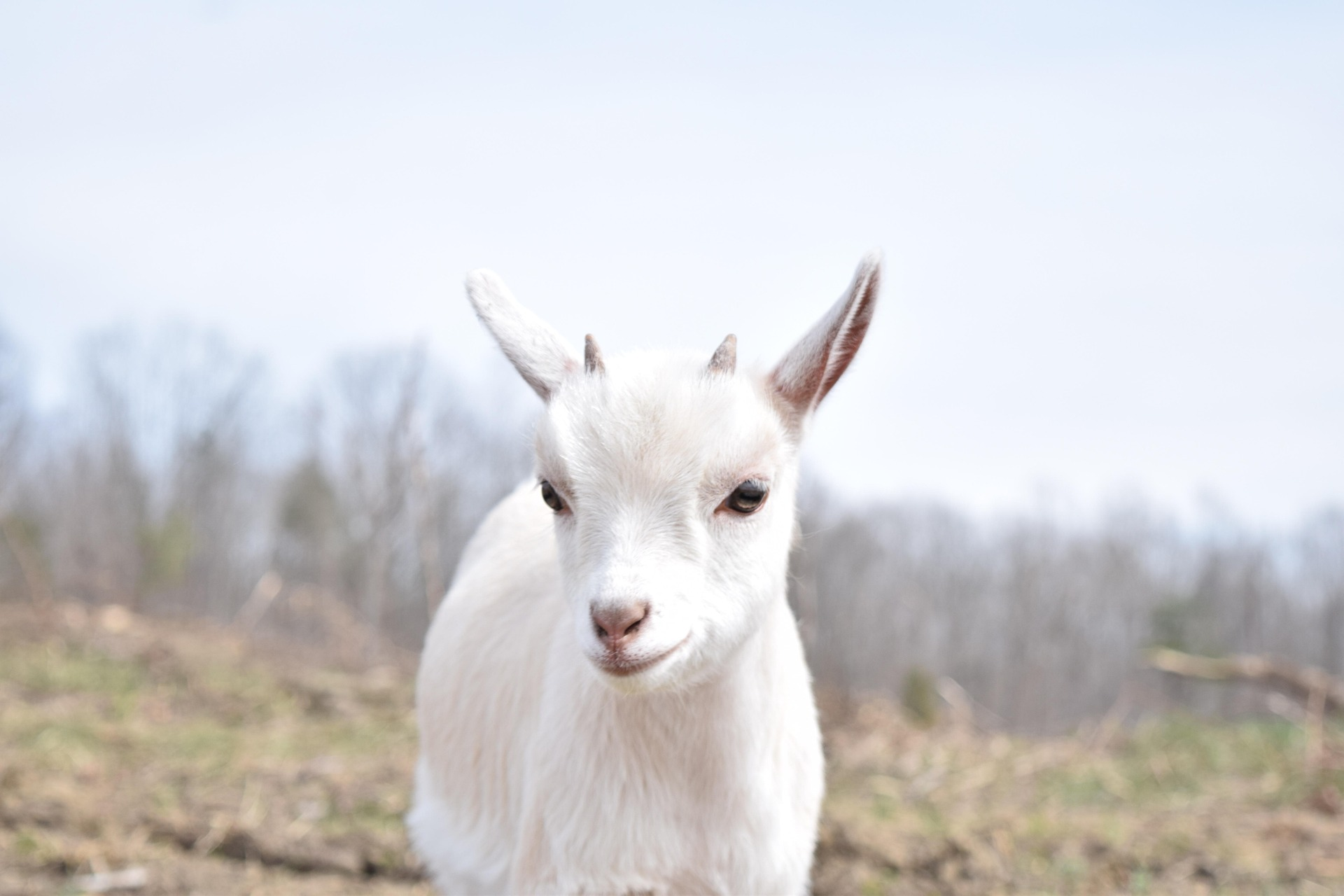
USDA’s last national count found that 96 percent of lambs born in 2010 were born alive, and 11.2 percent of those live lambs died before marketing. Weather was the single largest nonpredator cause at 27.3 percent, rising to 37.5 percent on large operations. Predators took 4.9 percent. So a February lambing pen is where the losses are, and the housing decisions you make in November are most of what you get to control.
Arkansas at Pine Bluff puts the timing more sharply. About a third of all lamb deaths happen in the first 24 hours. Another third are stillborn. Another 18 percent of perinatal deaths land by day eight. Lambs under 7 pounds mostly die of starvation or hypothermia.
What the critical temperature actually is
Missouri Extension gives 25 degrees as the lower critical temperature for sheep. Ohio State’s heat-lamp article gives 50 degrees for lambs and kids. Those are not the same animal. A dry adult with a full fleece sits below freezing. A freshly shorn one sits near room temperature. Newborns can hold their own body temperature for only a few hours.
Wet changes everything. Reposted NDSU material says lambs born into rain, sleet or wet snow are more likely to go hypothermic than lambs born in dry weather below freezing. Wind above 5 mph raises the risk sharply. SDSU adds the mechanism. Wool holds up to 30 percent of its weight in water. Seven pounds of fleece can carry 2 pounds of it.
Below the critical temperature it costs feed. Missouri and the reposted NDSU material both say add a quarter pound for every 10 degrees under. At 15 below zero that works out to about an extra pound of corn a day to hold condition. Plan the winter hay supply with that in it.
Ventilation, and the number nobody agrees on
Iowa State says four air changes an hour, one every 15 minutes. Penn State’s small-ruminant airflow piece says 4 to 15 changes an hour, or 20 cfm per animal. Wisconsin’s engineering table says 4 changes an hour and 20 cfm per adult goat in winter. Then SDSU models a sheep barn on 25 cfm per 1,000 pounds, or 0.63 air changes an hour, citing the 1994 MWPS handbook.
Those last two are not close. Forty 165-pound ewes weigh 6,600 pounds. At 25 cfm per 1,000 pounds that is 165 cfm for the whole barn. At 20 cfm a head it is 800. The gap is a minimum against a target, on two different denominators. Build for the higher one. You can always close it down.
Draft is the opposite problem, and two sources put a number on it. Iowa State calls air faster than 60 feet a minute a cold-draft risk for newborns. Wisconsin’s table wants under 1.6 feet per second for adults and under 0.6 for kids, which is 36 feet a minute. For natural winter ventilation Wisconsin specifies 2 inches of ridge outlet and 1 inch of eave opening per 10 feet of building width.
The failure you are watching for is moisture, not cold. SDSU describes closed-up barns trapping humidity until condensation on a cold steel roof drips back down. Penn State lists the three signs: ammonia you can smell, condensation on walls and ceilings, coughing and nasal discharge. The same logic applies to goat housing generally.
Heat lamps, and what the sources will not say
Ohio State’s safety team publishes real specs. Nothing over 250 watts. Keep the lamp at least 20 inches from the ground, from combustible bedding and from newborns. Keep a 10-pound ABC extinguisher in the barn. Another Ohio State piece drops the old fuse-sizing approach and asks for GFCI plus arc-fault outlets instead.
The most honest account is a Cornell Small Farms piece from a working sheep farm. Cheap hardware-store lamps cost under $10 and belong in the trash. An enclosed fixture runs about $40, and an arc-fault breaker costs about $40 against $4 for a plain GFI. Hang lamps on chains, as though they were permanent, never on twine. Expect at least 30 minutes before a fire truck arrives. That author reported two farm fires on his own place since 1996, and his first recommendation is to skip heat lamps and lamb later in the spring.
No agency publishes a barn-fire count attributable to heat lamps. The extension pages say the risk is real and leave it unquantified, which is worth knowing before you plan a lambing date around a bulb.
Colostrum is the number that moves survival
Most sources say 10 percent of body weight in the first 24 hours. Iowa State, NC State, Kansas State and Ohio State’s Talking Sheep all use it, so a 10-pound lamb needs about 16 ounces. Kansas State wants the first feeding inside 30 to 60 minutes, roughly 7 ounces for that lamb, then 2 to 4 ounces every 3 to 4 hours.
Two sources are lower. Ohio State’s own starvation and hypothermia fact sheet says 5 percent of body weight. For a 10-pound lamb that is 8 ounces, four right away and four within 12 hours. Montana State says about 6 ounces is what antibody protection takes. SDSU splits the difference at 1 to 2 ounces per pound, which brackets both.
The window disagrees too. Ohio State puts gut closure at about 12 hours. SDSU says absorption drops sharply after 12 hours and is near zero by 24. Iowa State says antibodies cross the intestinal wall through the first 24 to 36 hours. Feed early and the disagreement stops mattering, which is the practical reading.
Warm it in water, not a microwave. Kansas State, NC State and SDSU all say so, and all three put the feeding temperature near 102.5 degrees.
Warming a chilled lamb, where Ohio State fights itself
Normal is 102 to 103 degrees. Kansas State and NC State both say a lamb under 99 degrees should not be tube fed until it is warmed above 99. Ohio State’s Talking Sheep calls 99 to 100 mild hypothermia and under 99 severe. Alabama uses a different scale entirely, starting hypothermia at 102.2 degrees and calling anything under 93.2 severe.
On the hair dryer the same institution says both things. Talking Sheep prints a flat prohibition against using one to dry and warm lambs. Ohio State’s own starvation and hypothermia fact sheet lists a hand-held hair dryer as acceptable dry heat. SDSU names the real constraints instead. Keep a warming box under 103 degrees. Check the lamb and a box thermometer every 30 minutes. Expect a chilled lamb to need four to six hours.
Brown fat is why the clock is short. Ohio State puts the reserve at about five hours after birth, and OMAFRA says a lamb over five hours old may have nothing left to burn.
Jugs, dates and checks
Penn State sizes a jug at 4 by 4 feet for small to medium ewes and 5 by 5 for large ones, sides at least 3 feet high. Wisconsin wants 6 inches of bedding, and Penn State rules out sawdust for lambing outright. Clean and disinfect jugs between families, because bacteria live in the damp spots.
Count the dates backward. Sheep gestation runs 144 to 152 days depending on who you ask, with 147 the common figure. Goats run about 150. Oregon State starts the late-gestation diet 28 to 42 days out, because 70 percent of fetal growth happens in that window. Penn State and Iowa State both want a body condition score of 3 to 3.5 at lambing, on the five-point scale. Arkansas at Pine Bluff asks for 2.5 to 3.
Then set the check interval by the animal, not the calendar. NC State says every 6 to 8 hours for mature dams that mother well. Make it every 3 to 4 hours for young ones, or anything with a history of trouble. A lamb’s feet should appear within 30 minutes of the water bag. That is the number to have in your head at two in the morning, when the barn is cold and nothing has happened yet.
Sources
- USDA APHIS Veterinary Services, Sheep and Lamb Death Loss in the United States, 2011 (2014)
- University of Arkansas at Pine Bluff Cooperative Extension, Managing Perinatal Mortality in Lambs (FSA9614)
- University of Missouri Extension, Preparing Sheep for Winter Months (G2619) (2024)
- Ohio State University Extension, Do Sheep and Goats Get Cold?
- Ohio State University Extension Small Ruminant Team, Provide Sheep With Adequate Care in Winter
- Ohio State University Extension Small Ruminant Team, Safe Use of Heat Lamps and Barn Monitoring System (2023)
- Ohio State University Extension Agricultural Safety and Health, Caution Using Heat Lamps in Livestock Barns (2025)
- Ohio State University, Talking Sheep: Hypothermic Lambs
- Ohio State University Extension, Managing Starvation and Hypothermia
- Penn State Extension, Sheep Housing and Facilities Requirements
- Penn State Extension, Preparing for Lambing Season
- Penn State Extension, Small Ruminant Housing: Proper Airflow Is Important
- South Dakota State University Extension, Sheep Facilities and Moisture (P-00261) (2023)
- South Dakota State University Extension, Newborn Lamb Care Management (2021)
- University of Wisconsin-Madison Extension, Remodeling Retired Dairy Barns for Sheep Housing
- Iowa State University Extension and Outreach, Lambing and Kidding Basics
- Iowa State University Extension, Colostrum and Health of Newborn Lambs
- Kansas State University Research and Extension, Lambing Resources for Beginning Sheep Producers (MF3690) (2025)
- Kansas State University Research and Extension, Kidding Resources for Beginning Goat Producers (MF3689) (2025)
- NC State Extension, Lambing and Kidding Cheat Sheet (AG-909) (2021)
- Alabama Cooperative Extension System, Neonatal Hypothermia in Small Ruminants (2025)
- Oregon State University Extension Service, Nutrition for Lambing
- Montana State University Extension, Sheep Flock Management
- New Mexico State University, Sheep Production and Management (CR-703) (2022)
- Cornell Small Farms Program, Managing Risk Using Heat Lamps on the Farm
- Ontario Ministry of Agriculture, Food and Agribusiness, Care of the Newborn Lamb
Leave a Reply